On 6 June 2026, a 109-metre steel hull cleared the Norwegian port of Kristiansand and headed north. O3 — formerly known as Project Icecap, and later Project Shackleton — had left Lürssen's Hamburg yard, where she was outfitted and completed, after eight years in build, and the quiet stop marked the vessel's first public appearance since completing delivery trials.
The build attracted sustained industry attention not just because of its size, but because of what the vessel is designed to do: operate in ice-classed, remote waters that most superyachts of this value cannot safely enter. What follows is a factual account of the confirmed specifications, the build history, and the practical question that follows any delivery of this kind — what does a vessel like O3 actually require when it operates in Mediterranean waters?
The Vessel: Confirmed Specifications
The figures below are drawn from BOAT International's vessel directory and confirmed delivery reporting. All other specifications are omitted rather than extrapolated.
| Specification | Detail |
|---|---|
| Name | O3 (ex. Project Icecap / Project Shackleton) |
| Length overall (LOA) | 109 m (358 ft) |
| Beam | 17.5 m |
| Gross tonnage | 6,561 GT |
| Hull | Steel (ice-classed) |
| Superstructure | Aluminium |
| Propulsion | Three Wärtsilä diesel engines (diesel-electric system) |
| Guest accommodation | 20 guests / 10 staterooms |
| Builder | Lürssen — built at Peene-Werft (Wolgast), completed at Hamburg |
| Exterior design | Salt Ship Design; Espen Øino International |
| Interior design | Cristina Gherardi Design (CG Design) |
| Naval architecture | Lürssen and Salt Ship Design |
| Delivered | Spring 2026 (Kristiansand stop: 6 June 2026) |
Design credits in the table are as listed in BOAT International's vessel directory. The owner has not been publicly identified by the yard or by authoritative media.
Eight Years in Build: The History of Project Icecap
Construction on what would become O3 commenced in 2018, with the project originally sold under the name Project Icecap by Moran Yacht & Ship. The hull was built at Lürssen's Peene-Werft yard in Wolgast and moved to Hamburg in 2022 for outfitting and final completion. The specification from the outset included an ice-classed hull, a diesel-electric propulsion system, and cargo-carrying capability — all unusual requirements for a private superyacht at this length, and all reflecting the intended polar-expedition purpose.
The build underwent a significant change in 2022 when the vessel changed hands, prompting an extensive exterior redesign by Espen Øino International alongside a length extension. The interior brief, originally held by Adam Lay Studio, was also reimagined by Cristina Gherardi Design (CG Design). A large, certified helideck was added to the aft section — one of the most visible changes. The project name changed at this stage to Project Shackleton. Following delivery, the vessel was formally registered as O3.
The vessel made its first appearance away from the Hamburg facility in late January 2026, when it was photographed on sea trials. After completing trials, it departed Hamburg, stopped in Kristiansand, Norway, on 6 June 2026 — a standard refuelling waypoint for Lürssen deliveries — and was subsequently reported cruising the Danish coast.
What Sets O3 Apart from a Conventional Superyacht
The distinguishing characteristics of O3 are not cosmetic. They reflect a set of operational priorities that differ substantially from the warm-water charter superyacht or the conventional large motoryacht:
Ice-classed hull
A steel hull with an ice classification allows O3 to operate in regions that are inaccessible to the vast majority of private superyachts. Ice-class construction involves hull plate thickening, reinforced framing, and in some configurations bow strengthening to manage contact with ice. At 109 LOA and 6,561 GT, O3 belongs to a very small cohort of privately owned vessels that can legitimately make Antarctic or Arctic passages.
Wärtsilä diesel-electric propulsion
O3 is powered by three Wärtsilä diesel engines configured as a diesel-electric system. In this architecture, the diesel generators feed an electric bus, and electric motors drive the propellers — separating power generation from propulsion. The practical advantages for an expedition vessel are significant: lower fuel consumption at reduced speeds on long passages, better redundancy, and quieter operation when anchored or in transit through protected areas. Wärtsilä's generating sets are standard in offshore and commercial workboat applications, providing well-proven performance.
Cargo capability and the helideck
The original 2018 specification included cargo-carrying capability — unusual for a private superyacht and reflective of the intended expedition brief. The helideck visible on the delivered vessel is a large, fully certified aft flight deck added as part of the 2022 redesign; the original specification included a heli-hangar concept that was substantially upgraded at this stage. Together, these features position O3 as a vessel capable of extended self-sufficient operations rather than a warm-water charter circuit.
Scale and designer credits
At 109 m LOA, O3 is among approximately 270 superyachts globally that exceed 100 metres in a fleet of over 6,000 vessels — a cohort representing roughly the top 2% by length. Exterior design was led initially by Salt Ship Design (who also contributed to naval architecture) and then substantially reworked by Espen Øino International following the 2022 ownership change. Interior design was reimagined by Cristina Gherardi Design (CG Design), a Monaco-based studio, replacing the original interior brief. Naval architecture is credited to Lürssen and Salt Ship Design jointly.
Why the credits span two design phases
O3 passed through two distinct design phases separated by a 2022 ownership change. Phase 1 (2018–2022): Lürssen and Salt Ship Design developed the hull, naval architecture, and original exterior; Adam Lay Studio held the interior brief. Phase 2 (2022–2026): Espen Øino International extensively reworked the exterior; Cristina Gherardi Design reimagined the interior; the aft helideck was added. All four studios are credited in BOAT International's vessel directory. Attributing O3 to a single design house misses half the story.
What Explorer Superyachts Need in the Mediterranean
The Mediterranean is a transit and refit region for explorer-class vessels, not just a cruising destination. A 109-metre, ice-class vessel making a Mediterranean passage or staging for a high-latitude expedition requires a different service profile from a charter superyacht arriving for the summer season.
The practical requirements break down into three areas:
Port agency and customs clearance
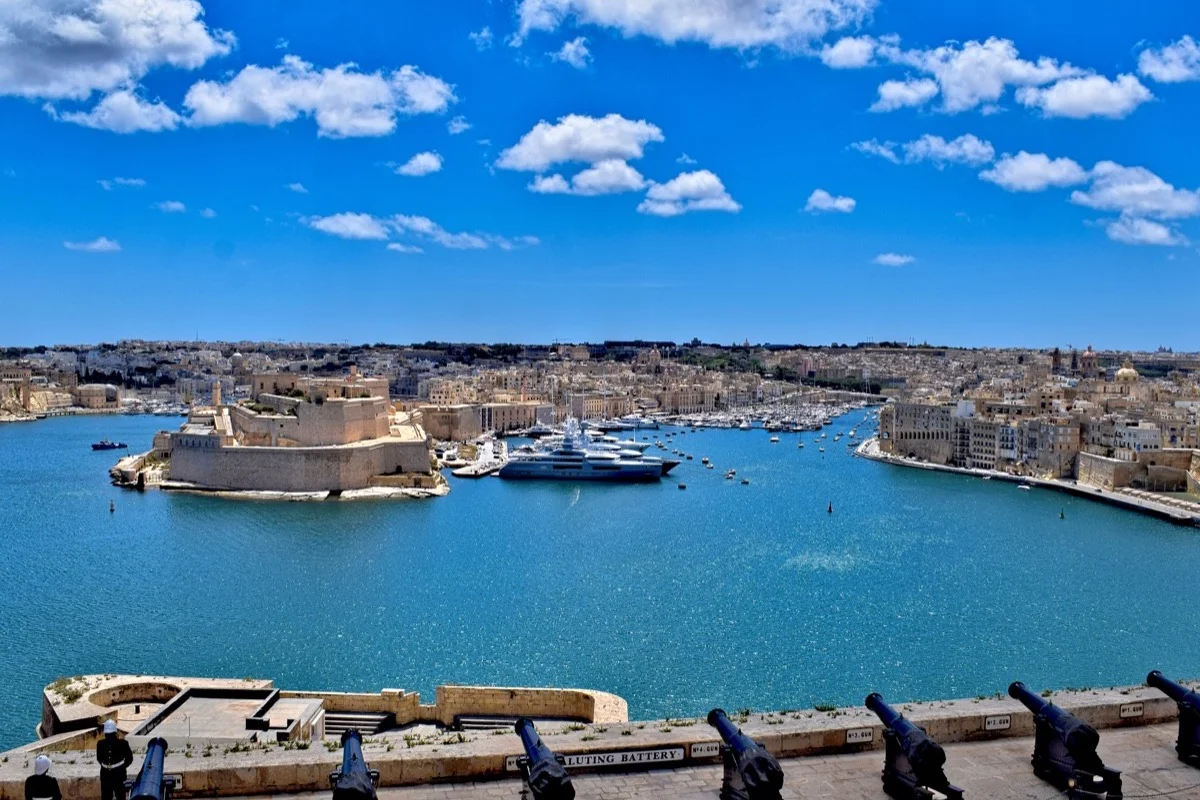
A vessel of 6,561 GT arriving from outside EU waters requires customs and immigration clearance at the first member-state port of call. Malta, as an EU member state, offers full clearance infrastructure through Grand Harbour and Marina di Valletta. Resident-agent representation handles documentation, crew change logistics, and berth coordination in advance — reducing the turnaround time at anchor or alongside for a vessel operating on an expedition schedule where port time has real cost.
Deepwater berth coordination
At 109 m LOA and 17.5 m beam, O3 requires berth slots that most marinas cannot accommodate. Malta's Grand Harbour deepwater berths are capable of handling vessels of this scale; coordination through a resident agent rather than a marina-direct inquiry ensures priority access and avoids the peak-season availability squeeze that regularly catches arriving vessels unprepared.
Provisioning for extended passages
An explorer-class vessel provisioning for a high-latitude passage has different requirements from a charter yacht between Palma legs. Quantities are larger, lead times matter, and technical-spares sourcing in parallel with consumables provisioning reduces port time. Malta's position as a central Mediterranean logistics hub — with direct access to EU supply chains and no cabotage restrictions on EU-flagged or registered vessels — makes it a logical staging point for vessels transiting east-west or north-south through the basin.
Mercer Yachting's Malta Desk offers resident-agent services for visiting superyachts — customs and immigration handling, berth and marina coordination, and provisioning and logistics under a single Malta-based point of contact. For vessels staging for technical work or considering flag options, the desk can also advise on Malta flag registration for owners considering an EU registry.
Frequently Asked Questions
What is the Lürssen O3 superyacht?
O3 is a 109-metre (358 ft) explorer superyacht built at Lürssen's Peene-Werft yard (Wolgast) and completed at the Hamburg facility, with delivery in spring 2026. Formerly known as Project Icecap and Project Shackleton, she features an ice-classed steel hull, three Wärtsilä diesel engines in a diesel-electric configuration, accommodation for 20 guests across 10 staterooms, and a large aft helideck. Exterior design credits go to Salt Ship Design (original) and Espen Øino International (post-2022 redesign); interior to Cristina Gherardi Design; per BOAT International's vessel directory.
When was O3 (Project Icecap / Project Shackleton) delivered?
O3 was delivered by Lürssen's Hamburg facility in spring 2026 and made a confirmed stop in Kristiansand, Norway on 6 June — a standard refuelling waypoint for vessels departing the Lürssen yard. Construction commenced in 2018, making the build approximately eight years in duration. The vessel was first photographed on sea trials in late January 2026.
What makes O3 an explorer superyacht rather than a conventional motoryacht?
O3's ice-classed steel hull allows operation in polar and high-latitude regions that conventional aluminium-hulled superyachts cannot safely enter. Combined with cargo-carrying capability specified in the original brief, a Wärtsilä diesel-electric propulsion system optimised for efficiency over extended passages, and a large certified helideck, she is designed for self-sufficient, long-range expeditions rather than a warm-water charter circuit. Her 6,561 GT and steel construction reflect this purpose.
What services do explorer-class superyachts need when operating in the Mediterranean?
Explorer vessels making Mediterranean passages require resident yacht-agent support for port clearance, customs and immigration handling, and berth coordination in deepwater marinas capable of accommodating large draught and LOA. Provisioning for extended passages differs from standard charter turnarounds: larger quantities, longer lead times, and technical-spares sourcing. Malta is well-positioned for this — Grand Harbour offers deepwater berths, EU clearance, and resident-agent infrastructure that scales to expedition-class vessels.
Sources
- BOAT International — O3 superyacht directory (specifications: LOA, beam, GT, propulsion, accommodation, designer credits): boatinternational.com/yachts/the-superyacht-directory/o3--95011
- BOAT International — O3 delivery (departure from Hamburg, Kristiansand stop 6 June 2026, delivery confirmation): boatinternational.com/yachts/news/.../o3-delivery
- BOAT International — O3 sea trials in pictures (January 2026, first appearance from yard since 2022): boatinternational.com/yachts/news/.../o3-sea-trials-in-pictures
- Robb Report — Lürssen O3 gigayacht sea trials coverage: robbreport.com/motors/marine/lurssen-o3-gigayacht-sea-trials
- SuperYacht Times — O3 delivered (delivery confirmation, name registry): superyachttimes.com/yacht-news/lurssen-yacht-o3-delivered
- Superyachts.com — 109m Lürssen O3 nears delivery following sea trials: superyachts.com/news/story/.../109m-lurssen-superyacht-o3