On 13 June 2026, the second hull in the Amels 80 series — Netto II — departed Damen Yachting’s Vlissingen facility in the Netherlands for her maiden voyage to the Mediterranean, marking her first passage as a delivered vessel. The hull was sold to a buyer in December 2022 and built by Damen Yachting, which sold the Amels 80 platform on a semi-custom basis. Netto II is distinguishable by her custom “dolphin blue” metallic hull, platinum bootstripe, and white superstructure — a colour scheme chosen by the owner and executed at the yard rather than part of the standard platform offering.
The vessel’s maiden voyage marks the beginning of what will be her first active season. What follows is a verified account of her confirmed specifications, design credits, and the practical considerations that apply when a 79.8-metre diesel-electric superyacht arrives in European waters for the first time.
Confirmed Specifications
The figures below are drawn from BOAT International’s vessel directory, SuperYacht Times, and YachtBuyer, cross-referenced across all three sources. Specifications not confirmed across at least two independent sources are omitted.
| Specification | Detail |
|---|---|
| Name | Netto II (second Amels 80 hull) |
| Length overall (LOA) | 79.8 m (262 ft) |
| Beam | 12.5 m |
| Gross tonnage | 2,175 GT |
| Hull | Steel |
| Superstructure | Aluminium |
| Propulsion | Two diesel-electric engines |
| Top speed | 16.5 kn |
| Range | 5,000 nm (at cruising speed) |
| Guest accommodation | 14 guests / 7 staterooms |
| Crew | 21 |
| Builder | Damen Yachting (Amels), Vlissingen, Netherlands |
| Exterior design | Espen Øino International |
| Interior design | Sinot Yacht Architecture & Design |
| Naval architecture | Damen Yachting |
| Launched | February 2026, Vlissingen |
| Maiden voyage departure | 13 June 2026, Vlissingen, bound for the Mediterranean |
The owner has not been publicly identified. Reports consistently describe the buyer as a “seasoned owner” — the only characterisation confirmed by the yard.
The Design Pedigree
Netto II is the product of three distinct contributors: the builder, the exterior designer, and the interior studio. Each is credited separately in the vessel directory, and attributing the design to any one of them misrepresents how the project was structured.
Exterior: Espen Øino International
The exterior of Netto II — characterised by clean horizontal lines, expansive glazing surfaces, and traditional porthole detailing — was designed by Espen Øino International, the Monaco-based design studio founded by Norwegian designer Espen Øino, whose work spans some of the largest superyachts afloat. The platform is a semi-custom design: the external architecture is consistent across Amels 80 hulls, with the custom “dolphin blue” metallic hull and platinum bootstripe applied specifically to Netto II at the owner’s specification. Espen Øino International is also credited for the post-2022 exterior restyle of Lürssen’s O3 — which departed Hamburg approximately one week before Netto II — a rare instance of the same studio credited on two major deliveries within the same fortnight.
Interior: Sinot Yacht Architecture & Design
Interiors are the work of Sinot Yacht Architecture & Design, the Dutch studio known for large-superyacht interiors combining space, natural light, and material restraint. Among the more notable confirmed interior features is a private speakeasy bar designed with a 1960s casino aesthetic — an evening retreat distinct from the main social areas. The main saloon benefits from floor-to-ceiling panoramic windows allowing natural light penetration. JQB Design is additionally credited by BOAT International for contributions to select interior and exterior areas.
Naval architecture: Damen Yachting
Damen Yachting handled the naval architecture in-house, a standard practice for the Amels semi-custom platforms. The diesel-electric propulsion system and the 5,000 nm range figure reflect the design priorities of a long-range cruising vessel rather than a performance motoryacht.
The Amels 80 platform
Netto II is the second hull in the Amels 80 series. Semi-custom platforms allow the yard to offer shorter build times and better price certainty by standardising hull, structure, propulsion, and primary systems, while customising exterior colour, interior design brief, and finishing. The first Amels 80, delivered in 2025, pioneered the platform; Netto II is the second. At least two further Amels 80 hulls were in various stages of outfitting as of early 2026.
What Diesel-Electric Means for Mediterranean Operations
Netto II’s diesel-electric propulsion is a deliberate design choice for a long-range cruising superyacht, and one with practical implications for how she operates in European waters.
In a diesel-electric system, diesel generators produce electricity that powers electric motors driving the propellers, rather than connecting diesel engines directly to the propeller shafts. The decoupling of power generation from propulsion produces several operational advantages:
- Lower fuel consumption at partial load. Electric motors running at reduced power draw are more efficient than a diesel engine running below its optimal RPM range. For a vessel making coastal Mediterranean passages at below top speed, this translates to meaningfully lower fuel burn per nautical mile.
- Quieter at anchor and low speed. Running one generator set rather than two at anchorage reduces noise and vibration in berthed or anchored positions — relevant for vessels spending extended time in quiet bays or marinas with noise restrictions.
- Greater redundancy. Independent generator sets feeding a shared electrical bus means a failure in one generating unit does not disable propulsion. This is a material safety advantage on long passages.
- 5,000 nm range. The quoted range of 5,000 nm at cruising speed means Netto II can make a transatlantic crossing without refuelling — confirming she was designed for extended passages rather than short-haul Mediterranean cruising.
The practical implication for port agents is that diesel-electric vessels on long-range programmes often have different provisioning patterns: less frequent, higher-volume provisions rather than charter-week turnarounds, and a greater emphasis on technical-spares sourcing in parallel with consumables.
What a First-Season 79.8m Superyacht Needs in the Mediterranean
Vessels entering their first active season have specific requirements that differ from established superyachts with an existing Med service footprint. The captain and management team are typically establishing new port relationships, flag compliance protocols, and provisioning routines simultaneously.
Berth coordination
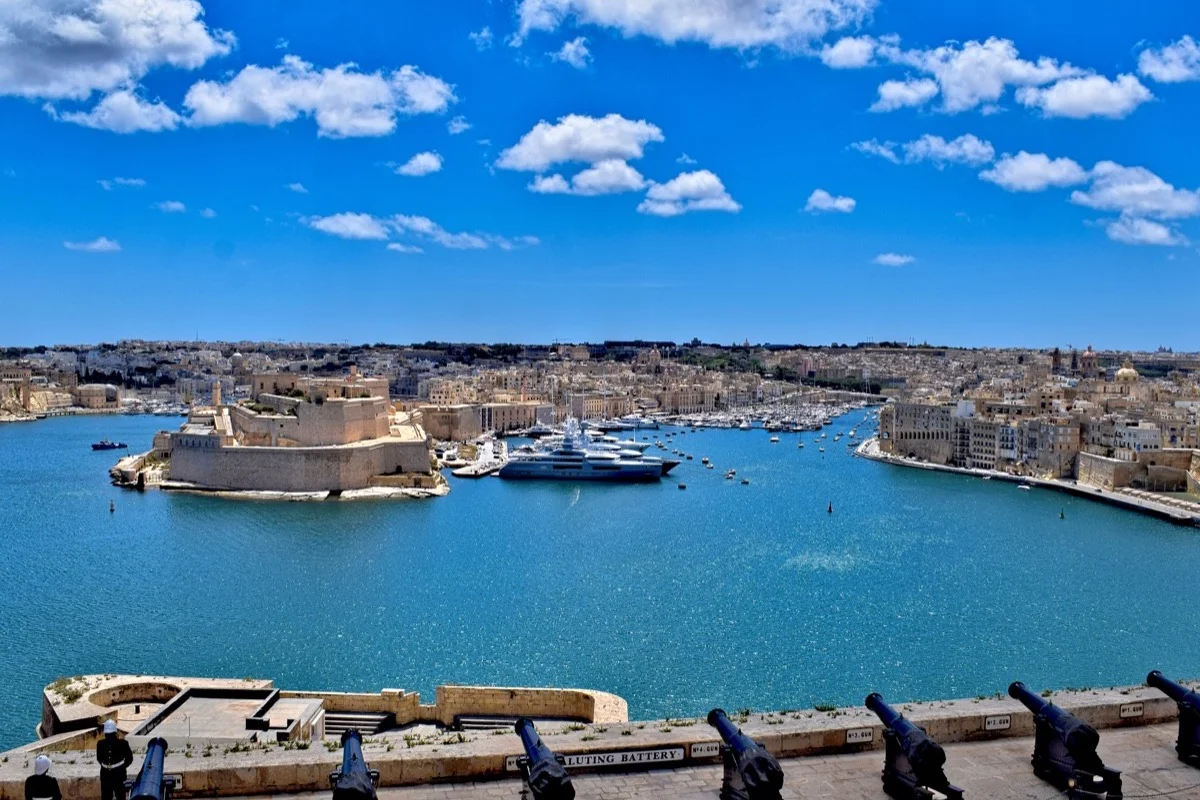
At 79.8m LOA and 12.5m beam, Netto II requires berth slots at deepwater marinas capable of accommodating both her length and width. Many popular Med marinas have finger berths or quay space that imposes practical limits on beam. Malta’s Grand Harbour deepwater berths are capable of handling vessels of this scale; pre-arrival coordination through a resident agent rather than a marina-direct enquiry reduces the risk of arriving without confirmed berth access during the summer peak.
Customs and EU clearance
If Netto II is not registered under an EU flag, she will require customs clearance at the first EU member-state port of call on each entry from outside the EU. Malta, as an EU member state with a well-established commercial yacht-clearance infrastructure, handles this routinely for non-EU-flagged vessels. A resident agent manages the documentation and pre-arrival notification on behalf of the captain, reducing the administrative load at arrival.
Provisioning and first-season logistics
First-season vessels frequently underestimate provisioning lead times in peak summer. Malta’s position as a central Mediterranean logistics hub — with access to EU supply chains and regular freight connections to both European and North African suppliers — makes it a practical staging point for restocking. Mercer Yachting’s provisioning and logistics service coordinates supply from a single Malta-based contact, allowing the captain to focus on operations rather than vendor management.
Mercer Yachting’s Malta Desk offers resident-agent services including customs and immigration handling, deepwater berth coordination, and provisioning and logistics for visiting superyachts. For owners considering EU registration options, the desk can also advise on Malta flag registration.
Frequently Asked Questions
What is Amels Netto II?
Netto II is a 79.8-metre (262 ft) motor superyacht built by Damen Yachting (Amels) at its Vlissingen yard in the Netherlands. She is the second hull in the Amels 80 semi-custom platform and was launched in February 2026 with a custom “dolphin blue” metallic hull. Her exterior was designed by Espen Øino International, her interiors by Sinot Yacht Architecture & Design (with contributions from JQB Design), and naval architecture is by Damen Yachting. Propulsion is via two diesel-electric engines. She departed Vlissingen on 13 June 2026 on her maiden voyage to the Mediterranean.
Where was Netto II built and when was she delivered?
Netto II was built at Damen Yachting’s Vlissingen facility in the Netherlands. The hull was sold to her owner in December 2022, with the Amels 80 platform offered on a semi-custom, speculation-build basis. She launched (hit the water) in February 2026, completed sea trials in the North Sea, and departed Vlissingen on 13 June 2026 for her maiden voyage to the Mediterranean. The buyer is described in public reporting as a “seasoned owner”; no further details have been publicly confirmed by the yard.
What does diesel-electric propulsion mean for a Mediterranean superyacht?
In a diesel-electric system, diesel generators produce electricity that powers electric motors driving the propellers, rather than connecting diesel engines directly to the shafts. For a long-range cruising superyacht, the practical advantages include lower fuel consumption at reduced speeds typical of coastal Mediterranean passages, quieter operation at anchor, greater redundancy from independent generator sets, and a quoted range of 5,000 nm enabling transatlantic crossings without refuelling. These characteristics suit extended-passage vessels rather than vessels running short charter legs.
What does a 79.8m superyacht need when entering the Mediterranean for the first time?
A vessel of Netto II’s scale in her first Med season needs advance berth coordination at deepwater marinas capable of accommodating 79.8m LOA and 12.5m beam, customs and immigration clearance at the first EU port of call, and provisioning support for crew and guests. First-season vessels also need to establish port relationships and provisioning routines simultaneously. A resident agent in Malta can coordinate all of this under a single contact, reducing administrative load on the captain at the start of a new season.
Sources
- SuperYacht Times — Netto II overview (LOA, GT, beam, propulsion, speed, range, accommodation, design credits): superyachttimes.com/yachts/netto-ii/overview
- SuperYacht Times — Netto II sea trials ahead of delivery: superyachttimes.com/yacht-news/amels-80-yacht-netto-ii-sea-trials
- Skipper ONDECK — Netto II sets off on her maiden voyage to the Med (15 June 2026, confirming 13 June Vlissingen departure): skipperondeck.gr/amels-80-netto-ii-sets-offon-her-maiden-voyage-to-the-med
- BOAT International — Netto II vessel directory (specifications, design credits): boatinternational.com/yachts/the-superyacht-directory/netto-ii--15059
- BOAT International — Launch of Netto II in Vlissingen (February 2026): boatinternational.com/yachts/news/second-amels-80-yacht-netto-ii-launch
- BOAT International — Netto II on North Sea sea trials: boatinternational.com/yachts/news/second-amels-80-yacht-netto-ii-sea-trials
- Megayacht News — Netto II launch, speakeasy bar interior: megayachtnews.com/2026/02/netto-ii-yacht-amels-80/
- YachtBuyer — Netto II fleet listing (specs cross-check): yachtbuyer.com/en/fleet/netto-ii-262-amels