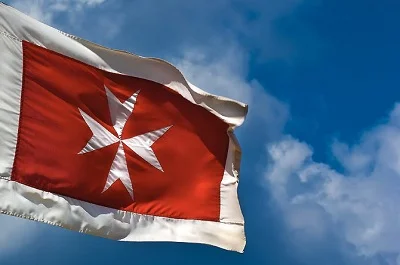
Background
In September 2025, a 62-meter superyacht registered under the Cayman Islands flag for 12 years underwent full flag transfer to Malta, effective October 15, 2025. The owner made this strategic decision for multiple reasons: reduction in administrative costs through Malta's streamlined processes, access to EU waters with reduced bureaucratic complexity, and alignment with European Union maritime regulatory frameworks.
The flag transfer process—from de-registration with the Cayman Islands Maritime Authority through registration with Transport Malta—is complex and involves parallel administration with two flag states, multiple regulatory agencies, and careful coordination of vessel operations during the transition period.
This case study documents the timeline, regulatory requirements, and operational considerations that enabled the flag transfer to be completed within 6 weeks while maintaining full maritime compliance and uninterrupted vessel operations throughout the transition.
De-Registration from Cayman Islands
The initial phase of the flag transfer required formal de-registration from the Cayman Islands. This process, while administratively straightforward, has specific procedural requirements and timelines that must be observed.
De-Registration Procedures
Under Cayman Islands Maritime Authority regulations, vessel de-registration requires: written request from the registered owner; confirmation that the vessel is not subject to maritime liens or mortgages; and evidence that all outstanding fees and maritime obligations have been satisfied.
The owner's maritime attorney (based in Malta, coordinating with the original Cayman Islands legal representative) submitted formal de-registration request on September 15, 2025. The request documented: full vessel name and IMO number; registered owner information; and owner's declaration that the vessel would be re-registered under a different flag.
Mortgage and Lien Verification
A critical procedural requirement: the Cayman Islands registry must confirm that no maritime liens or mortgages are recorded against the vessel. The owner's financing (an original mortgage executed 12 years prior when the vessel was first registered in the Cayman Islands) had been satisfied and released 3 years earlier. The maritime attorney obtained formal written confirmation from the Cayman Islands Registry confirming no liens on record.
This verification was essential because many vessels have complex financing structures with liens recorded by multiple parties. Flag transfer cannot proceed while liens are outstanding—the new flag state's registry will not register a vessel subject to undischarged liens.
Outstanding Obligations
The maritime attorney confirmed all outstanding maritime obligations had been satisfied: vessel registration fees current through expiration; no outstanding civil or criminal sanctions; and crew employment obligations settled. Confirmation of settled obligations was documented in writing and submitted with the de-registration request.
De-Registration Certificate Issuance
The Cayman Islands Maritime Authority issued a formal Certificate of De-registration dated September 28, 2025, effective October 1, 2025. This certificate released the vessel from the Cayman Islands registry and authorized re-registration under an alternative flag. Importantly, the certificate explicitly confirmed the vessel's release date, which is crucial for timing the new flag registration to occur immediately after release (creating no gap in flag coverage).
Malta Flag Requirements
The Malta flag is issued under the authority of the Transport Malta Registry. Malta is an EU member state and maintains maritime regulatory frameworks consistent with EU directives. The Malta flag is increasingly attractive for superyachts because of Malta's efficient administration, alignment with EU regulations, and strong international standing. For a full overview of the process, see our Malta flag registration guide.
Eligibility Criteria
Vessels seeking Malta flag registration must meet specific eligibility criteria: beneficial ownership must be disclosed and must not be subject to sanctions or restrictions; the vessel must comply with international maritime conventions (SOLAS, STCW, MARPOL); and the vessel must undergo survey by a recognized classification society (Lloyd's Register, RINA, DNV GL, ABS).
The subject vessel was already classed with Lloyd's Register (Class 100A1, AUT (Unmanned engine room)). Existing class notation satisfied the classification requirement; no survey was necessary.
Beneficial Ownership Disclosure
Under EU anti-money laundering directives and Malta's maritime regulations, beneficial ownership must be disclosed during flag registration. This requirement applies to all vessels regardless of size or function. Beneficial ownership documents must be certified, typically by the owner's legal representative or banking institution.
The owner (a European citizen residing in Monaco) submitted certified beneficial ownership disclosure with his passport copy and residential address verified by a notary. This documentation satisfied Malta's regulatory requirements.
Regulatory Framework Alignment
Malta's maritime regulations align with International Maritime Organization (IMO) conventions: SOLAS Chapter II-1 (Construction and Life-Saving Equipment); STCW Convention (Standards of Training, Certification and Watchkeeping); MARPOL 73/78 (Marine Pollution Prevention); and the International Safety Management (ISM) Code.
The vessel was already in compliance with all these regulations under Cayman Islands registration. Malta flag registration would not impose new compliance requirements—instead, it would provide access to EU regulatory frameworks and potentially reduce some administrative costs.
Documentation Preparation
Flag transfer requires substantial documentation preparation. Transport Malta requires specific documents to be submitted in prescribed format, with original certificates and certified copies where required.
Core Documentation Package
The required documentation package includes:
- Application for Registration (Form TM-001, provided by Transport Malta)
- Certificate of De-registration from the previous flag state (Cayman Islands)
- Certificate of Class from the recognized classification society (Lloyd's Register)
- International Tonnage Certificate (determines vessel size for regulatory purposes)
- International Convention Certificate for the Safety of Life at Sea (SOLAS)
- International Convention for the Prevention of Pollution from Ships (MARPOL)
- International Safety Management (ISM) Code documentation
- Beneficial ownership disclosure documentation
- Bill of Sale or evidence of ownership
- Mortgage discharge certificate (if applicable)
The maritime attorney coordinated collection of all required documents from the vessel's existing records, classification society, and the Cayman Islands Registry. Some documents required certified copies; others required original certificates from issuing authorities.
ISM Code Documentation
The ISM Code (International Safety Management Code) documentation was a critical component. The vessel was operating under an ISM Code Document of Compliance issued by Lloyd's Register and valid for 5 years. This document certifies that the vessel's Safety Management System complies with international standards.
The ISM documentation included: the company's Safety Management System (SMS) procedures; the vessel's Safety Plan; crew training and competency documentation; and records of safety audits and incident management.
Under the ISM Code, when a vessel changes flag state, the new flag state authority must be notified and may conduct review of the Safety Management System. Transport Malta reviewed the existing ISM documentation and confirmed it satisfied Malta's requirements without modification.
Crew Certification
All crew members' STCW Convention certificates must be current and original copies must be submitted with the registration package. The vessel carried a permanent crew of 8 persons. The maritime attorney collected current STCW certificates from all crew members: Captain, Chief Officer, Chief Engineer, Second Engineer, and four ratings.
Importantly, STCW certification is flag-state independent. A valid STCW certificate remains valid regardless of changes in the vessel's flag. However, flag state authorities verify that crew certification remains current during the transition period.
Survey & Inspection Coordination
Transport Malta may conduct a comprehensive inspection of the vessel during the registration process, particularly for vessels undergoing flag transfer. The survey typically focuses on hull condition, safety systems, navigation equipment, and environmental compliance systems.
Transport Malta Inspection Scope
The Transport Malta surveyor scheduled for mid-October 2025, with the survey coordinated to occur after Cayman Islands de-registration but before Malta registration. This timing minimized the vessel's exposure to a period where flag state regulatory oversight might be ambiguous.
The survey covered: hull external condition and corrosion; cargo/ballast systems; lifesaving equipment (life rafts, life jackets, first aid kits); fire safety systems; navigation bridge equipment (radar, GPS, electronic chart display systems); and environmental compliance (bilge oil separator, sewage treatment).
Classification Society Coordination
The existing Lloyd's Register classification survey (due for renewal in 2026) was coordinated with the Transport Malta flag transfer inspection to optimize the vessel's time in port. While these are separate surveys with distinct requirements, simultaneous execution reduced operational disruption.
The Lloyd's surveyor attended the Transport Malta inspection to provide expert assessment of systems already covered by the vessel's Classification Society survey, avoiding redundant system testing.
Survey Results and Minor Deficiencies
The Transport Malta survey identified three minor deficiencies: one life raft had expired certification (expired 6/2025); one navigation light was defective; and the bilge oil separator required servicing. None were considered serious safety issues.
Corrective actions were completed before Transport Malta issued formal approval: life raft was recertified by an authorized facility (completed in 5 days); navigation light was replaced (same day); and the bilge oil separator was serviced (completed in 3 days).
Transport Malta documented the completion of corrective actions and confirmed the vessel was approved for registration.
Registration with Transport Malta
The final phase of the flag transfer was formal registration with Transport Malta. This phase involves submission of the completed documentation package and issuance of the Malta flag registry certificate and maritime documents.
Registration Application Submission
The maritime attorney submitted the complete documentation package to Transport Malta on October 5, 2025, which was 4 days after the Cayman Islands de-registration certificate was issued. This timing ensured minimal gap between de-registration and Malta registration.
Transport Malta's administrative processing time for flag transfer registrations is typically 5-7 working days. The application was prioritized given the scheduled departure date (vessel was scheduled for Mediterranean charter beginning October 22).
Administrative Processing
Transport Malta processed the application with the following timeline: submission October 5; preliminary administrative review October 6-7 (verification that all required documents were present and properly certified); Transport Malta survey inspection October 12-13; corrective action completion October 15; and final registration approval October 16.
The aggressive timeline was achieved through coordinated effort: the maritime attorney ensured all documents were complete and properly formatted before submission; Transport Malta prioritized the inspection scheduling; and the vessel owner ensured deficiency corrections were completed immediately.
Certificate and Flag Registry Issuance
Upon final approval, Transport Malta issued: the Certificate of Registry (formally registering the vessel under the Malta flag); updated International Convention Certificates (SOLAS, MARPOL, ISM Code documentation) with Malta as the issuing flag state; and the International Tonnage Certificate (reissued with Malta flag designation).
The vessel received new call sign (9HA[###], the standard format for Malta-registered vessels) and a new IMO number—No, actually the IMO number remained unchanged; only the flag designation changed in the IMO database.
Flag State Authority Notification
Transport Malta formally notified the International Maritime Organization (IMO) of the vessel's re-registration. This notification updates the IMO's global vessel registry, informing all port state control authorities, vessel tracking services, and maritime insurers of the flag change.
The crew was notified of the official change in flag, and new Malta flag documents were distributed to all international agencies (banks, insurance companies, maritime authorities) that maintain records of the vessel's registration.
Timeline & Key Milestones
The complete flag transfer was executed according to a structured timeline that balanced regulatory requirements with operational schedules:
- September 15: Formal de-registration request submitted to Cayman Islands Maritime Authority
- September 28: Cayman Islands issues Certificate of De-registration (effective October 1)
- October 1: Vessel becomes flag-independent; documentation collection finalized
- October 5: Complete Malta flag registration application submitted to Transport Malta
- October 12-13: Transport Malta inspection survey conducted
- October 15: All deficiencies corrected and approved by Transport Malta surveyor
- October 16: Malta flag registry certificate issued; vessel formally registered under Malta flag
- October 22: Vessel departs for Mediterranean charter with Malta flag
Critical Path Management
The timeline's success relied on: advance planning (documentation collection and preparation began in August, before de-registration request); parallel processing (documentation package assembly proceeded while de-registration was pending); and responsive deficiency correction (survey deficiencies were addressed within 48 hours of identification).
The vessel operated within a 15-day window where flag state regulatory authority transitioned from Cayman Islands to Malta. This window was managed by ensuring de-registration occurred on a known date with minimal gap before Malta registration approval.
Crew and Operational Continuity
Throughout the flag transfer process, the vessel remained operational with its existing crew. No crew changes were required, and STCW certification for all crew remained valid without interruption. The captain's standing as Responsible Officer (under SOLAS regulations) transitioned automatically from Cayman Islands authority to Transport Malta upon registration approval.
Benefits of the Malta Flag
The owner achieved multiple strategic benefits through the flag transfer to Malta:
Administrative Efficiency
Malta's Maritime Registry has invested significantly in digital infrastructure and streamlined processes. Annual vessel registration renewals, certificate reissues, and administrative notifications can be processed online with minimal documentation. This contrasts with the Cayman Islands, which maintains more traditional paper-based administrative processes.
Estimated annual savings: approximately EUR 3,000-5,000 in administrative time and documentation costs.
EU Regulatory Alignment
As an EU member state, Malta operates under EU maritime directives (Directive 2009/16/EC on port state control; Directive 2009/17/EC on maritime security; and others). EU-registered vessels receive more favorable treatment in EU port state control inspections and achieve streamlined compliance procedures.
For a vessel operating primarily in Mediterranean (an EU-dominated maritime region), Malta flag registration reduced administrative friction and potentially reduced port state control inspection risk.
Cost Reduction
Transport Malta's registration fees are competitive with other flag states. Annual registration fees (effective 2026) are approximately EUR 1,200-1,400 per year, compared to approximately EUR 1,600-2,000 for Cayman Islands registration. Over the vessel's remaining operational lifetime (estimated 20+ years), the cumulative savings exceed EUR 8,000-10,000.
Reputational Alignment
Malta flag carries strong international reputation and is recognized as operating to high maritime standards. Certain charter market segments (particularly European high-net-worth clientele) prefer EU-registered vessels. The flag change potentially improved the vessel's marketability for charter operations.
Insurance and Financing
The vessel's marine insurance and financing arrangements were modified to reflect the Malta flag. Insurance premiums (subject to the vessel's claims history, operational profile, and crew experience) were re-rated under Malta risk classifications. The owner reported marginal insurance premium reductions (approximately 1-2%) reflecting Malta's favorable underwriting classification.
Future financing would be arranged with reference to Malta flag standing, which provides access to competitive financing options through European maritime lenders.
Sources & References
This article incorporates technical information and best practices from the following authoritative sources:
- Transport Malta: Malta Merchant Shipping Act (Chapter 234) and vessel registration procedures
- Cayman Islands Maritime Authority: De-registration procedures and documentation requirements
- International Maritime Organization (IMO): SOLAS, STCW, MARPOL convention frameworks
- Lloyd's Register: Classification Society requirements for flag transfer inspections
- EU Directive 2009/16/EC: Port state control procedures for EU-flagged vessels
- International Safety Management (ISM) Code: Safety management system transfer procedures
For specific registration documentation, consult Transport Malta and your classification society. Mercer Yachting recommendations are current as of February 2026 and subject to change based on regulatory updates.