Why a Service Plan Decides Whether Seabob Survives the Charter Season
The Seabob is not a complicated machine in the way a foiling water toy or a jet ski is. It has no foiling wing, no exposed prop drivetrain and no surface combustion engine. The electric jet pump that drives the unit lives inside a sealed propulsion housing; the battery sits in a removable pack closed by a single critical lid seal; the magnesium-titanium body is engineered for daily seawater exposure. The whole architecture is built around an annual visit to a Cayago-authorised facility and minimal owner intervention in between.
That architecture works beautifully on a recreational Seabob doing thirty hours a year. It works less forgivingly on a Mediterranean charter yacht running a Seabob for six guests a week, twelve weeks a season, across thousand-kilometre coastal repositions and a fortnight in marine-saltier high-temperature anchorages. The same parts wear faster; the lid seal gets opened more often; the anodes lose mass more aggressively; and the warranty narrative changes the moment Cayago has any reason to invoke clause 8 of the official 8-clause warranty document.
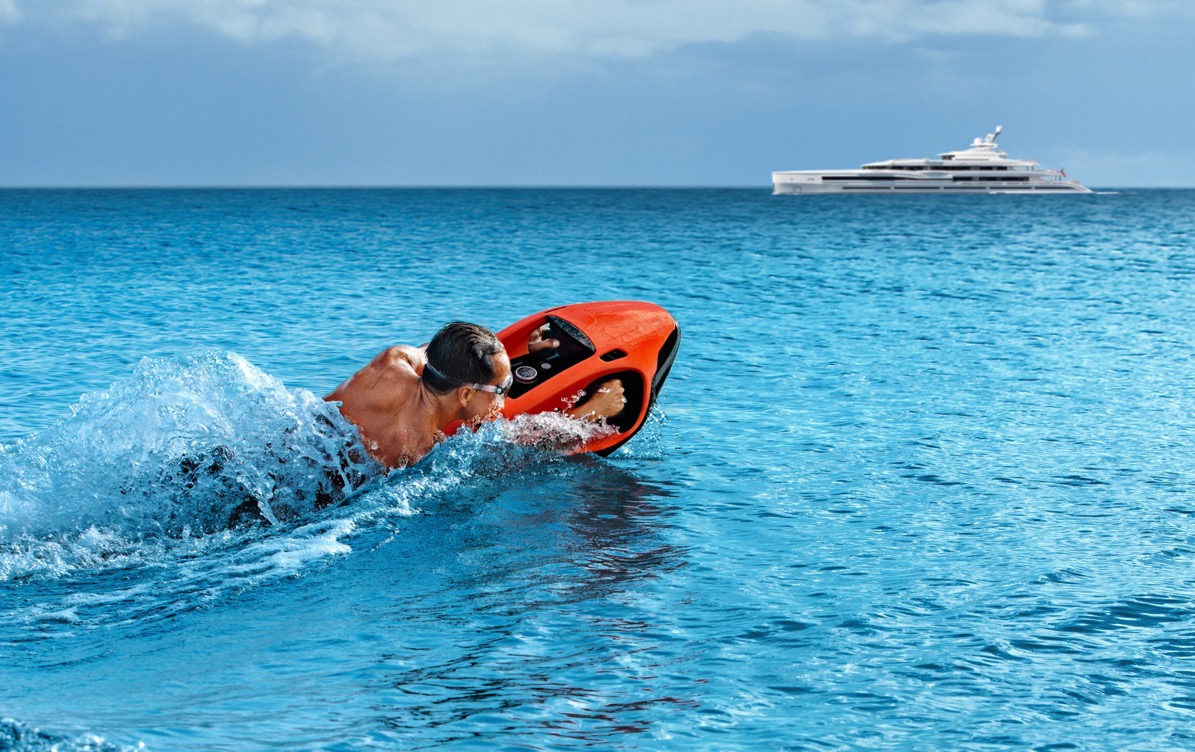
This guide covers the full Mediterranean charter-season service rhythm: the annual Cayago authorised inspection that anchors the warranty; the pre-season wake-up after winter storage; the visual checks crew should run between guest weeks; end-of-season battery conditioning and storage; how clause 8 actually plays out for revenue-generating use; the MGN 681 lithium storage rules that hit UK-flagged yachts in January 2027; and where Mercer Yachting fits between the unit on your platform and Cayago AG in Stuttgart. For the Mercer 2026 Seabob price list and clause 8 in pricing context, see the Seabob price guide.
The Cayago Service Rhythm — Annual Inspection + Mid-Season Checks
Cayago AG runs a deliberately simple service expectation: one full inspection per year at an authorised facility, plus light visual checks by crew or owner between major use cycles. For a Mediterranean charter yacht that means the annual service typically happens during winter lay-up (October to March, depending on the yacht’s programme), and mid-season checks slot in between guest weeks during the May-to-September charter window.
What the Cayago authorised annual service actually does on a Seabob — F9, F9 S or SE63 — covers seven things in turn. None of them is owner-serviceable; the entire sequence ceases the warranty if attempted at a non-authorised facility:
- Sealed propulsion-housing pressure test — the e-jet drive sits inside a sealed housing. The annual check pressurises that housing to verify there is no slow ingress path. A failed pressure test is the single most common Cayago-only repair item; it requires the housing to be opened, reset and re-sealed by an authorised technician.
- Drive seal & lid seal inspection — the propulsion seal that runs through the housing and the lid seal that closes the battery compartment are the two waterproof boundaries Cayago checks at every service. Either is replaced if compression, surface integrity or visible salt-residue ingress is found.
- Anode replacement — the Seabob carries sacrificial anodes for galvanic protection in seawater. Annual replacement is standard; on heavy charter rotations anode wear is one of the early-warning indicators that the unit is seeing more cycles than the deployment profile declared at order placement.
- Battery diagnostic via Seabob controller — the Cayago authorised facility connects to the Seabob controller and reads battery cycle count, deep-discharge events, charging temperature history and cell balance. The diagnostic is the source of truth on battery state-of-health that Cayago uses if a warranty claim is ever lodged.
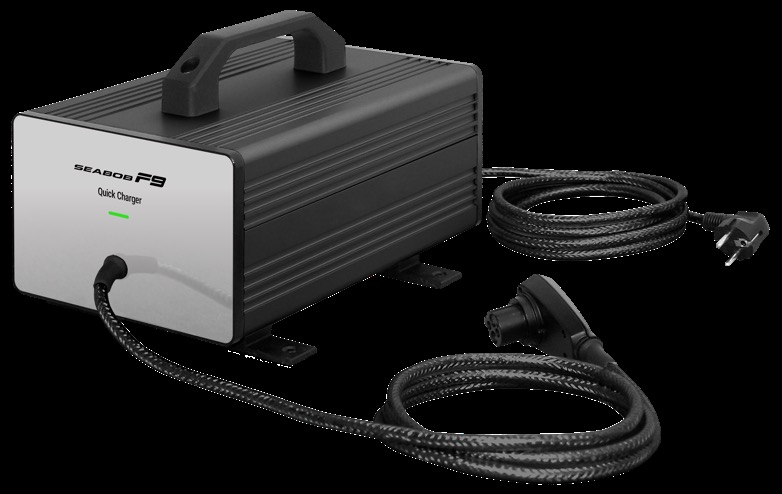
- Charging system check — the standard charger (and the optional Quick Charger, if fitted) are verified for output voltage, current profile and connector integrity. A failed charger that has cooked a battery cell is a clause 8 conversation; a working charger documented in the service record is the simplest way to keep that conversation short.
- Electronic safety cut-off verification — the 3.0 m automatic depth cut-off on the F9 line and the SE63 are tested by the authorised facility against Cayago’s reference parameters. Cut-off behaviour drifts over time on units that have been deep-cycled aggressively.
- Firmware update to latest Cayago release — the Seabob controller carries a Cayago-owned firmware that ships updates for charging profile refinement, cut-off thresholds and diagnostic logging. The authorised facility flashes the latest stable release at service.
Mercer Yachting does not publish a flat-rate annual service price. The annual inspection is quoted per visit based on the unit’s age, what the diagnostic surfaces and whether anodes, seals or firmware-only work are needed. For a charter operation, declaring the operational profile at the start of the season — expected guest weeks, expected ports, charging routine on board — tells the service quote whether the unit is on a light or heavy cycle and lets Mercer pre-stock the consumables most likely to be needed.
The mid-season checks are different. These are not "service" in the Cayago sense — they are visual and procedural items that crew can run themselves between guest weeks, with the warranty intact, because they don’t involve opening the unit. The mid-season checklist is in the section below on charter crew checks.
Pre-Season Service & Storage Wake-Up
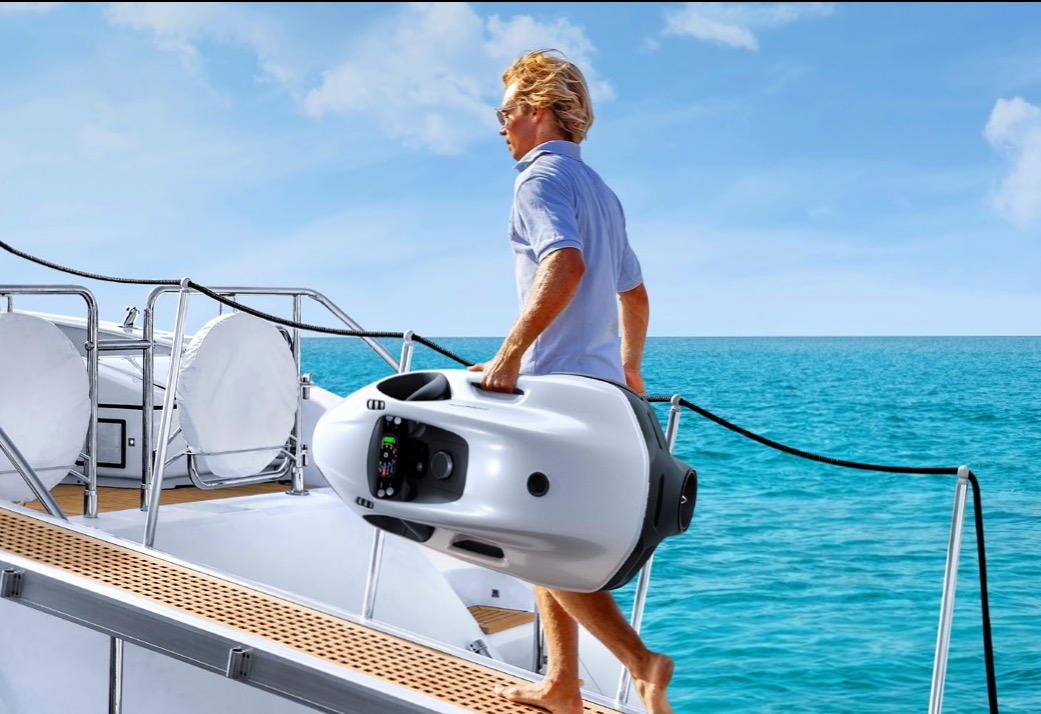
Pre-season is the right window for the Cayago annual inspection on a charter yacht. The unit comes off winter storage with the battery at 50–60% state-of-charge, the lid seal needing a visual check after months unmoved, and any firmware updates from the off-season needing to be flashed before the first guest week. Doing the annual at the start of the season rather than at the end means the diagnostic data Cayago captures is for the unit as it leaves charter, not for the unit as it goes to bed for the winter — a small difference that helps if a warranty conversation is needed later.
A typical pre-season service week for a yacht in Mercer Yachting’s programme runs like this:
- Collection from the vessel — Mercer collects the Seabob (and any spare batteries, chargers, Pilot Belt and Lifting Dock) from the yacht’s berth or storage container, transports to the Marsaskala facility and signs in the Cayago service record.
- Cayago authorised inspection — the seven-item service rhythm runs in sequence. Pressure test, drive seal, lid seal, anodes, battery diagnostic, charging system, cut-off verification, firmware update. Any consumables (anodes, seals, gaskets) come from Cayago-supplied parts only.
- Cosmetic check — the body of the F9 line uses titanium, magnesium and Cayago’s ceramic coatings. Surface scuffs from charter-season use are noted; any deeper damage is flagged for owner decision on repair before the season starts.
- Battery wake-up cycle — the battery is brought up from the 50–60% storage charge to a full operational cycle, then run through one discharge to operational lower limit and back to full. This re-establishes the battery management system’s state-of-health baseline for the season ahead.
- Return to vessel — the unit is delivered back to the berth (or to a nominated Mediterranean port if the yacht has already moved) with the updated Cayago service record, refreshed firmware version logged, and any consumables replaced documented on the warranty paperwork.
For a yacht overwintering in Mallorca, Antibes, Monaco, Athens or Genoa, Mercer Yachting coordinates with Cayago AG’s authorised Mediterranean service network so the pre-season service can happen at the right port and the yacht doesn’t have to ship the Seabob to Malta and back. The Cayago service line for buyers outside the Americas is +49 5222 8509-255 (service@seabob.com, Monday–Friday 09:00–18:00 CET). Mercer routes that contact on the yacht’s behalf.
Booking the 2026 season pre-service?
Tell us the yacht, the home port and your charter calendar. We’ll align the Cayago authorised inspection to your start week and coordinate collection-and-return so the unit is ready for guests on day one.
Mid-Season Charter Crew Checklist

Between guest weeks the Seabob doesn’t need a Cayago technician. It needs ten minutes of crew time and a clear rule about what crew can touch and what crew can’t. The single hardest line to hold on a charter yacht is "the unit doesn’t get opened by anyone other than Cayago". Once that line is held, the rest is procedural.
The mid-season checklist below covers the items that are crew-safe — visual, external, non-invasive. Anything that requires opening the propulsion housing, lifting the battery lid for more than a quick visual, or interfering with the firmware ceases the warranty and goes to Cayago.
Between every charter week
- Freshwater rinse after each use — the most basic maintenance item and the one most often skipped on busy guest rotations. The Seabob is rated for seawater use but is engineered to be rinsed with fresh water after each session. Salt left to crystallise on the body and around the lid-seal edge is the single biggest cosmetic and operational degradation factor.
- Visual check of the battery lid seal — the lid seal is the boundary between the battery compartment and the outside world. Check for visible salt crust on the seal face, for any sand or grit caught between seal and lid, and for any compression irregularities. Wipe the seal face with a clean damp cloth; do not remove or replace the seal.
- Anode condition check — the sacrificial anodes on the body are visible. They are designed to corrode, so some surface degradation is expected. What you’re looking for is anode mass below roughly half of original, which signals heavy galvanic activity and should trigger a call to Mercer Yachting to bring the unit in for early Cayago anode replacement.
- Body integrity — visual scan for cracks, deep scuffs or impact damage to the magnesium-titanium hull. Surface scratches are cosmetic and routine; anything that has compromised a ceramic coating layer should be flagged.
- Charging behaviour — observe the charger LED sequence at start, mid-cycle and end. The standard Cayago charge profile is consistent across sessions; a charge that completes faster than usual, runs hotter than usual at the connector, or trips the charger mid-cycle is a flag, not a "just unplug and re-try" situation. Stop, photograph the connector, contact Mercer.
- Cut-off and depth behaviour — the F9 and F9 S have a 3.0 m automatic safety cut-off. If a crew member notices the cut-off engaging at a shallower depth than usual, or failing to engage as expected at 3 m, that is a service event — not an "operate around it" event.
Between charter weeks (light service window)
When the yacht has a few days between guest groups, two procedural items help:
- Battery cycle reset — if the unit has been used heavily for a week with short top-ups rather than full charge cycles, run a single complete discharge-to-operational-lower-limit followed by a full standard charge cycle. This keeps the battery management system’s state-of-charge estimate accurate.
- Consumables stock check — the Pilot Belt System (S/M/L/XL) wears with use; if a strap is fraying or a buckle is sticking, replace from the spare on board. The Seabob Cover, Seabob Bag and Seabob Rack are not service items but their condition affects stowage hygiene.
None of these is a torque-wrench item. The Seabob deliberately doesn’t expose anything that needs a torque-specified user intervention — that’s by design, and it’s how Cayago keeps the warranty boundary clean.
End-of-Season Storage & Battery Conditioning
The end of the charter season is when a Seabob is most at risk — not from use, but from inattention during the winter lay-up. Lithium battery technology degrades faster at high state-of-charge held for long periods than it does at moderate state-of-charge held for the same time. The Cayago guidance is clear and worth holding to closely.
Battery storage state-of-charge
Leave the Seabob battery at 50–60% state of charge for long-term storage. Not full, not empty. A battery left at 100% over winter slowly degrades the cathode chemistry; a battery left at 0% risks deep discharge below the cell-protection cutoff, after which the cell may be unrecoverable and a warranty conversation under clause 8 is the most likely outcome. The 50–60% middle band is what Cayago’s battery management system is engineered to sit at without stress.
Storage temperature
The storage cabinet should sit in the 5–25°C band. Mediterranean tender garages on yachts left in the water through winter often run hotter than 25°C in summer storage and colder than 5°C in deep winter at northern berths — both ends of that range accelerate battery degradation. A climate-controlled tender space or a dedicated lithium storage cabinet ashore is the right answer for an off-season longer than a few weeks.
MGN 681 lithium safety storage
UK-registered yachts (Red Ensign Group flags including the Cayman Islands, Bermuda, Gibraltar and the UK itself for Maltese-built vessels that have switched) have a hard deadline. The Maritime and Coastguard Agency’s MGN 681 amendment requires lithium battery storage cabinets meeting EN 14470 (fire resistance), EN 16121 and EN 16122 (storage cabinet construction), with the underlying cells tested to IEC 62619 (industrial lithium safety) or IEC 62620 (lithium cells for stationary application). The deadline is 1 January 2027. UK-flagged yachts that overwinter Seabob units (or any sealed lithium battery toy) without an MGN 681-compliant cabinet from that date forward are non-compliant.
Malta-flagged yachts are not directly bound by MGN 681 — the Merchant Shipping Notice applies to Red Ensign Group flags — but the underlying EN/IEC standards are recognised across most European yacht insurers and many yacht-management standards. Mercer Yachting can specify and supply an EN/IEC-compliant lithium storage cabinet alongside any Seabob order; for a charter yacht the cabinet pays for itself the first time an insurer asks about lithium storage protocols.
The actual end-of-season sequence
- Final freshwater rinse after the last guest session, dry the body thoroughly, wipe the lid seal.
- Run the battery down to roughly 50–60% state-of-charge using the Seabob in a final operational session or by using the charger in calibrated discharge mode (Cayago authorised technicians can do this if needed).
- Disconnect the charger. The battery is sealed in its pack; leave it in the unit unless Cayago specifies removal.
- Place in storage cabinet at 5–25°C, dry, in the EN/IEC-compliant cabinet for UK-flagged yachts or a comparable dry climate-controlled space for other flags.
- Mid-winter check at month three — visual on the cabinet, confirmation the temperature is held, no charger reconnection needed.
- Pre-season service in spring — back to the Cayago authorised inspection for the season’s annual.
Clause 8: How Cayago Handles Charter Exposure
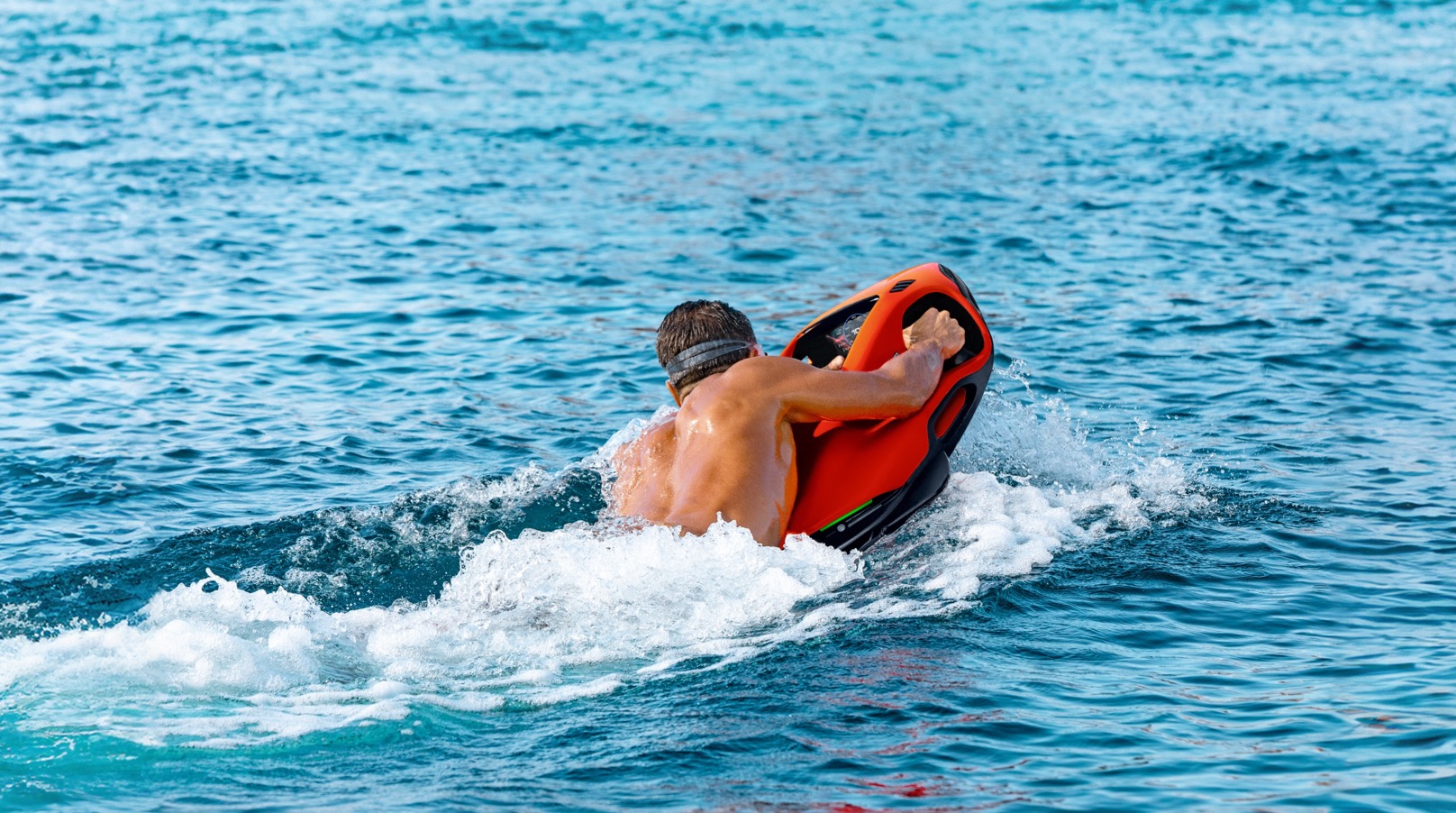
Cayago AG runs one warranty: 24 months from the date of transfer, on the original purchaser, applied to all three models — F9, F9 S and SE63 Lamborghini Edition. There is no separate "commercial" tier and no published charter rider. What Cayago has instead is clause 8 of the official 8-clause warranty document, and clause 8 is where the conversation about charter use actually happens.
Clause 8 lists what the warranty does not cover. The list includes natural wear and tear, improper handling, repair at a non-authorised facility, unauthorised modifications and failure to observe the manuals. Sitting in the middle of those routine exclusions is the operative phrase for charter operators:
"Exceptional form of use which is contrary to the normal use of the item being sold, and which has not been approved by the Vendor on a case-by-case basis."
Clause 8, Cayago AG Warranty DocumentTwo things matter about that text. First, the discretion sits with the Vendor — Cayago AG — not with the buyer. Cayago decides whether a particular use pattern is "exceptional", and Cayago decides whether to approve it. Second, the test is "case-by-case basis", which is what makes pre-declaration of the operational profile so important. A heavy charter rotation that Cayago has been told about before the unit ships is on materially different footing to the same rotation that Cayago hears about for the first time when a warranty claim is filed two seasons in.
In practice, "exceptional use" is not defined in the warranty document and Cayago has not published a benchmark. Industry context: a typical recreational Seabob does 30–50 hours a year; a Mediterranean charter Seabob can hit several hundred hours in a single twelve-week season. Cayago’s clause 8 discretion is wide enough to cover that gap, and a Seabob declared from day one as charter equipment with the expected use pattern logged is much more likely to clear a clause 8 conversation than one declared as private.
The other clause 8 trigger that catches yachts is unauthorised service. The warranty ceases — Cayago’s wording, not "terminates" — the moment a Seabob is opened or serviced by anyone other than a Cayago authorised facility. A yacht engineer pulling the battery lid to "have a look" is the single most consistent route to lost cover. Crew can rinse, visually inspect, and operate the unit; crew cannot open it. That line is the entire reason the annual Cayago authorised service exists in the form it does.
For pricing context on the warranty alongside the Mercer 2026 list, the dedicated Seabob price guide walks through F9, F9 S and SE63 figures with the clause 8 framing in commercial context. This service guide is the operational side of the same conversation.
Running Seabob in a heavy charter rotation?
Mercer declares the operational profile at order placement, routes service through Cayago’s authorised network, and keeps documentation in case clause 8 ever needs to be discussed. Talk to us before specifying.
MGN 681 & Charging Storage on Board
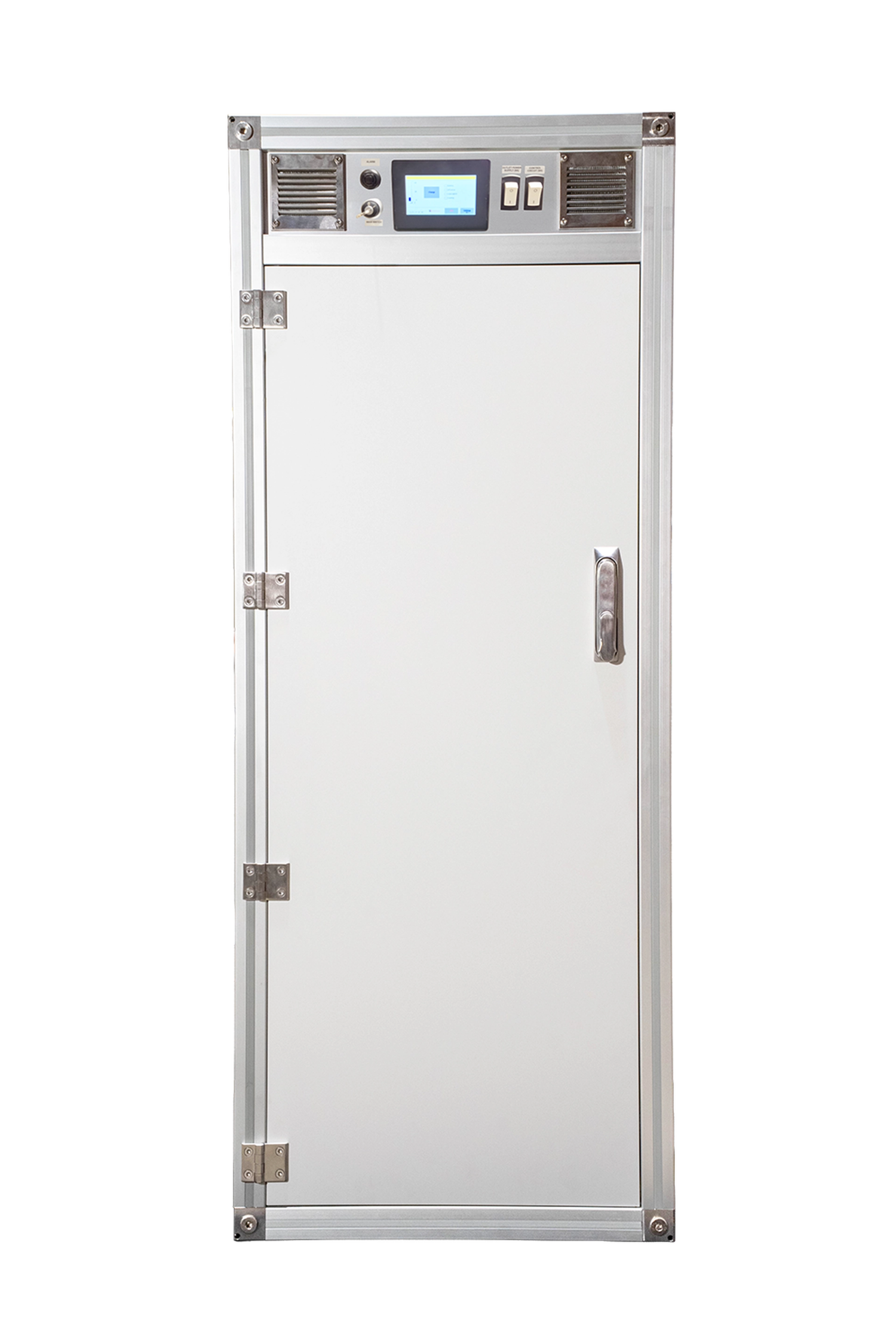
Lithium battery safety has moved from an industry-discussion topic to a regulatory deadline. The Maritime and Coastguard Agency’s MGN 681 amendment is the most directly relevant for any Red Ensign Group-flagged yacht carrying Seabob units or any other large lithium-ion toy battery on board.
What MGN 681 actually requires
For UK-flagged and Red Ensign Group-flagged yachts (Cayman Islands, Bermuda, Gibraltar, Isle of Man, Jersey, Guernsey), MGN 681 introduces a hard 1 January 2027 deadline for lithium battery storage and charging arrangements on board. The compliant set-up has three layers:
- Storage cabinet meeting EN 14470 (fire-resistant cabinet construction for hazardous materials) plus EN 16121 and EN 16122 (storage furniture standards for mechanical safety and construction).
- Cell-level testing to IEC 62619 (safety requirements for industrial lithium-ion cells and batteries) or IEC 62620 (lithium cells and batteries for stationary application). Cayago’s sealed battery packs sit within this regulatory frame, though the formal documentation is held by Cayago AG.
- Charging protocol — charging inside the cabinet where the cabinet is rated for charging, or in a designated charging location with appropriate fire detection and suppression.
What this means for Seabob on a charter yacht
The Seabob battery is sealed inside the unit and the whole Seabob, with its battery, is stored together. For a Red Ensign Group-flagged charter yacht the practical question is: where does the Seabob live between sessions, and is that location MGN 681-compliant from 1 January 2027 onwards?
Three scenarios crew face:
- Seabob lives on the swim platform in a Seabob Lifting Dock — convenient for guest use, but the platform is not a compliant storage location for any state-of-charge beyond imminent use. The unit needs to return to a compliant cabinet for any storage longer than a single guest session.
- Seabob lives in the tender garage in a Seabob Bag — the tender garage may or may not meet MGN 681 depending on the yacht. Most do not without retrofit.
- Seabob lives in a dedicated lithium battery cabinet in the technical space — the compliant answer. The cabinet meets EN 14470 and houses the Seabob (and any other lithium toys) between sessions, with charging done inside or in a compliant adjacent space.
Malta-flagged yachts (and yachts under EU non-Red Ensign flags) are not formally subject to MGN 681. The underlying EN and IEC standards remain widely recognised by yacht insurers and Class societies, so for any yacht operating commercially with lithium battery toys on board, building the storage protocol to the MGN 681 standard is sensible insurance whatever the flag. Mercer Yachting can specify and supply an EN/IEC-compliant cabinet alongside any Seabob order, sized to the yacht’s toy inventory.
Malta Chapter 378 — B2C Only Protection
Beyond the Cayago manufacturer warranty, Maltese-flagged consumers benefit from one additional layer of statutory protection — but only if they buy as a private individual. The distinction matters enormously for charter operations.
What Chapter 378 actually does
Malta’s Consumer Affairs Act Chapter 378 confers a 2-year statutory guarantee of conformity on consumer purchases by private individuals. Two key features of that statutory guarantee:
- First 12 months — the burden of proof reverses onto the seller. If a fault appears within the first year of ownership, the law presumes the fault was present at the time of sale unless the seller can demonstrate otherwise.
- Second 12 months — the burden of proof sits with the buyer. The statutory guarantee continues to apply, but the buyer must establish that the fault arose from a non-conformity that existed at delivery.
The Chapter 378 guarantee is an additional layer that sits alongside, not instead of, the Cayago AG manufacturer warranty. For a private individual buying a Seabob in Malta for recreational use, both apply: clause-8-bounded Cayago manufacturer warranty plus Chapter 378 statutory guarantee of conformity. That is the strongest possible cover the law allows.
Who Chapter 378 does NOT cover
The Maltese consumer-protection framework is built to protect private consumers. It does not extend to:
- Charter operators — companies running charter as a revenue-generating business activity
- Yacht-management companies — entities holding yachts on behalf of beneficial owners under management mandate
- Corporate buyers — companies purchasing Seabob on behalf of a vessel, an owner or a fleet
- Owners purchasing via SPV — an individual buying a Seabob through a special-purpose vehicle company (a common Malta structure) loses Chapter 378 protection because the SPV is a commercial buyer, not a consumer
For all of these categories, Maltese commercial law applies and the Cayago 24-month manufacturer warranty — subject to clause 8 — is the only protection on the unit. This is one of the most overlooked structural points in Malta yacht-toy purchasing: the same physical Seabob, the same Cayago warranty, comes with materially less consumer protection if it’s bought through a corporate vehicle than if it’s bought as a personal item.
Mercer Yachting can structure the invoice either way depending on the buyer’s circumstances. For a private Maltese individual buying their own Seabob, the invoice goes to the individual at Malta 18% gross and both layers of protection apply. For a charter operation buying through a Malta-flagged SPV, the invoice goes to the company under whatever VAT treatment fits the operation, and only the Cayago manufacturer warranty applies.
Mercer Yachting Service Routing

Mercer Yachting sits between the yacht and Cayago AG. We are the authorised Cayago dealer for Malta, based in Marsaskala, and the operational interface for any Seabob service or warranty event on a Mediterranean charter yacht. The routing works the same way whether the yacht is in Malta or in Antibes.
How a service event reaches Cayago
Crew on board notice an issue (or pre-season service is due). Crew or captain contact Mercer Yachting on +356 79797962 (Mon–Sat 05:00–21:00 CET) or by WhatsApp. Mercer logs the unit’s serial number, the Cayago warranty registration date and the operational profile on file, then either:
- For yachts in or routing through Malta — Mercer arranges collection of the Seabob from the berth, transports to the Marsaskala workshop, and routes the unit into the Cayago authorised service flow. The Cayago service line for buyers outside the Americas is +49 5222 8509-255 / service@seabob.com (Monday–Friday 09:00–18:00 CET) — Mercer holds that contact so the yacht doesn’t carry the admin.
- For yachts berthed elsewhere in the Mediterranean — Mercer coordinates with Cayago AG’s authorised Mediterranean service partner network. The yacht doesn’t have to ship the unit back to Malta. Service happens at or near the yacht’s current port (Antibes, Palma, Monaco, Genoa, Athens and other major Mediterranean hubs are routine destinations), and Mercer holds the paperwork trail so the Cayago service record stays unbroken.
How a warranty event reaches Cayago
If the issue is a warranty event — a battery cell failure, a propulsion-housing seal failure, an electronic fault — Mercer Yachting handles the case directly with Cayago AG in Stuttgart. The yacht receives one point of contact (Mercer), one set of correspondence, and one routing decision to either repair locally under warranty cover or to ship to Cayago’s German service facility. The Cayago HQ at Flachter Str. 32, D-70499 Stuttgart and production facility at Benzstraße 10, D-32108 Bad Salzuflen are the two German anchor points; everything else routes through them.
What Mercer is not
We are not the Cayago factory and we don’t open the propulsion housing in-house outside the authorised technician boundary. The Cayago service rhythm is engineered to keep that boundary clean — authorised technicians work to Cayago’s technical manuals, with Cayago-supplied parts, on Cayago-approved fixtures. Mercer’s job is to make sure the unit reaches that boundary cleanly and that the yacht doesn’t carry the back-and-forth with Germany. For charter yachts that’s the entire reason to buy from an authorised Mediterranean dealer.
How to Book a Seabob Service Through Mercer Yachting
Service booking through Mercer Yachting is a simple operational handover. The yacht’s captain, ETO or shore-based manager provides four pieces of information and Mercer takes the rest:
- Unit identification — model (F9, F9 S or SE63), serial number, original Cayago warranty registration date, current state-of-health summary from the most recent Cayago service record if available.
- Operational profile — private vs charter, expected weeks of use this season, typical guest mix, ports of operation. The same operational profile that should have been declared at original order placement (so clause 8 stays clean) is the basis for the service brief.
- Location and timing — where the yacht is, where the yacht will be when the service window opens, and the calendar window between guest groups. Mercer aligns the service to the yacht’s schedule, not the other way around.
- Specific concerns — anything the crew has noticed mid-season that doesn’t belong in the visual-check category: charge anomalies, cut-off behaviour drift, surface damage, lid-seal concerns, charger heat or LED-sequence irregularities.
Mercer returns within 24 business hours with a service quote (annual inspection or specific repair), a service window aligned to the yacht’s programme, and the Cayago service-record reference so the warranty paperwork stays unbroken. Service is quoted per visit rather than on a flat-rate annual schedule because the diagnostic and consumable mix varies with the unit’s age, use intensity and Cayago’s firmware-update state at the visit window.
For owners considering a Seabob purchase — F9, F9 S or SE63 — the pricing and warranty context sits in the dedicated Seabob price guide, and the buyer’s-perspective comparison across the three models is in the 2026 buyer’s guide. Mediterranean delivery logistics for a new unit are covered in the delivery guide.
Book a Seabob service or pre-season inspection.
Tell us the unit, the yacht, the port and the window. We’ll quote the Cayago authorised service, align it to your charter calendar and keep the warranty paperwork clean. 24-hour turnaround on bookings.
Frequently Asked Questions
Reviewed by Ryan Rizzo, Operations Lead, Ritz Marine Ltd · Published 24 May 2026
How often does a Seabob need servicing?
Cayago AG expects an annual inspection at an authorised service facility for every Seabob — F9, F9 S and SE63 Lamborghini Edition. The annual service is the maintenance event that keeps the 24-month manufacturer warranty in force; without it the warranty record has a gap that Cayago can raise under clause 8 if a fault later requires a claim. For heavy charter rotations Mercer Yachting also runs mid-season visual checks between guest weeks — non-invasive items that crew can run themselves without affecting warranty status.
What does the annual Cayago service cover?
A Cayago authorised annual service typically covers seven items in sequence: a pressure check on the sealed propulsion housing; inspection of the drive seal and battery lid seal; anode condition check and replacement where required; a full battery diagnostic via the Seabob controller; a charging system check (standard charger and Quick Charger if fitted); verification of the electronic safety cut-off; and a firmware update to the latest Cayago release. Consumables come from Cayago-supplied parts only. Mercer Yachting routes the unit through the Cayago network from Marsaskala.
Does my Seabob warranty cover charter use?
Cayago AG offers a single 24-month manufacturer warranty from the date of transfer for all models. There is no separate "commercial" or "charter" tier. Clause 8 of the official warranty document excludes "exceptional form of use which is contrary to the normal use of the item being sold, and which has not been approved by the Vendor on a case-by-case basis" — the clause Cayago invokes for heavy charter exposure. Mercer Yachting declares the operational profile at order placement so any borderline event later can be routed through Cayago with the original use case documented.
Can I service my Seabob myself or have my crew do it?
No. The Cayago warranty ceases the moment a Seabob is opened or serviced by an unauthorised entity. That includes well-meaning crew opening the unit to troubleshoot a fault. All service and warranty events must be routed through Mercer Yachting and back to Cayago’s authorised network. Visual checks and the routine post-use freshwater rinse are crew-level tasks; anything beyond that goes to authorised service.
Where do I get a Seabob serviced in Malta?
Mercer Yachting handles Seabob service from Marsaskala, Malta, for any Maltese-flagged yacht or any yacht visiting Malta during the season. The unit is collected from the vessel, serviced through the Cayago authorised network and returned with the Cayago service record updated. Mercer also coordinates pre-arrival to align service windows with the yacht’s berth schedule.
What if my Seabob needs service in another Mediterranean port?
Mercer Yachting coordinates service through Cayago AG’s authorised Mediterranean partner network for yachts berthed outside Malta — Antibes, Palma, Monaco, Genoa, Athens and other major hubs. Cayago’s service line for buyers outside the Americas is +49 5222 8509-255 / service@seabob.com (Monday–Friday 09:00–18:00 CET). Mercer routes the contact, the diagnostic and the warranty paperwork so the yacht doesn’t carry that admin.
How should I store my Seabob battery between seasons?
Cayago’s guidance for long-term storage is a 50–60% state of charge in a dry, temperature-controlled cabinet between roughly 5°C and 25°C. The lid seal must be clean and intact. For UK-registered yachts the Maritime and Coastguard Agency’s MGN 681 amendment introduces a 1 January 2027 deadline for lithium battery storage cabinets meeting EN 14470, EN 16121 and EN 16122 — Mercer Yachting can specify a compliant cabinet alongside the Seabob order.
Is my Seabob covered by Malta’s Chapter 378 consumer guarantee?
Only if you are a private individual buyer (B2C). Malta’s Consumer Affairs Act Chapter 378 confers a 2-year statutory guarantee of conformity on consumer purchases, with the first 12 months reversing the burden of proof onto the seller. Charter operators, yacht-management companies and corporate buyers (including individuals buying through a SPV) do not benefit from Chapter 378 — they fall under commercial law and rely on the Cayago 24-month manufacturer warranty alone, subject to clause 8.