MGN 681 (M) Amendment 1 is the UK Maritime and Coastguard Agency's guidance on fire safety, storage, and charging of lithium-ion batteries aboard yachts. Published 19 December 2025, it supersedes the original MGN 681 (M) of 2 June 2023. Its full title is "Fire safety and storage of small electric powered craft on yachts".
It applies to any yacht carrying electrically powered craft (e-foils, seabobs, electric tenders, jet skis) and sets out requirements for battery storage above 100 Wh, dedicated charging arrangements, crew training, fire detection, and fire suppression. The guidance is based on the REG Yacht Code Part A, Chapter 14.
From 1 January 2027, all battery storage and charging containers on UK-registered vessels must be UK Type Approved by a UK Nominated Body (section 5).
This article breaks down every key requirement, with exact section references, so you can assess your vessel's position and act before the deadline.
What Is MGN 681 (M) Amendment 1?
MGN 681 (M) Amendment 1 is guidance from the MCA directed at yachts carrying small electrically powered craft powered by lithium-ion batteries. It covers fire safety, storage, charging, ventilation, detection, suppression, and crew training.
Scope
The guidance applies to Li-ion batteries only. Alternative battery chemistries (such as lithium iron phosphate) require a separate risk assessment. It doesn't apply to battery propulsion systems, only to batteries in portable craft and devices carried aboard.
Precedence Hierarchy
MGN 681 is guidance, not statute. It sits below statutory requirements and class rules in the hierarchy:
- Statutory requirements (highest priority)
- Class rules
- MGN 681 guidance
Where statutory requirements or class rules impose stricter standards, those take precedence.
Full Text
The full text of MGN 681 (M) Amendment 1 is available on GOV.UK. For enquiries, contact regyachtcode@mcga.gov.uk or call +44 (0)203 81 72000.
The Three Battery Thresholds: 100 Wh, 500 Wh, 10 kWh
MGN 681 defines three key thresholds that determine what level of safety infrastructure is required aboard. Understanding where your equipment falls is the first step toward compliance.
100 Wh: Dedicated Storage Required (Section 4.2)
Any spare or removed lithium-ion battery exceeding 100 Wh must be stored in a dedicated cabinet conforming to EN 14470, EN 16121, or EN 16122. This is the threshold that catches most yacht water toys: e-foils, seabobs, electric diver propulsion units, and electric SUPs all carry batteries well above 100 Wh.
500 Wh Aggregate: Crew Awareness
When smaller personal devices (laptops, phones, battery vacuums) collectively reach 500 Wh, crew awareness requirements apply. Individual devices remain below the 100 Wh threshold, but the aggregate presence of lithium-ion batteries aboard warrants attention in safety briefings.
10 kWh: Additional External Storage/Charging (Section 4.23)
When battery capacity reaches 10 kWh, additional requirements apply for external storage and charging arrangements. Electric tenders (40–100 kWh) and electric jet skis (20–50 kWh) place vessels firmly above this threshold.
Typical Battery Sizes
| Equipment | Typical Battery Size | Threshold Triggered |
|---|---|---|
| Electric tender | 40–100 kWh | 10 kWh (section 4.23) |
| Electric jet ski | 20–50 kWh | 10 kWh (section 4.23) |
| Electric diver propulsion unit (BOB) | 1–3 kWh | 100 Wh (section 4.2) |
| Electric foil | 1–5 kWh | 100 Wh (section 4.2) |
| Electric SUP | 1–5 kWh | 100 Wh (section 4.2) |
| Laptop | ~40 Wh | Below 100 Wh |
| Mobile phone | ~10 Wh | Below 100 Wh |
| Battery vacuum | ~65 Wh | Below 100 Wh |
Removed batteries above 100 Wh also fall under UN 3480 classification. On SOLAS/REG Code yachts over 500 GT, this triggers special carriage requirements under the IMDG Code.
Storage Requirements
MGN 681 section 4 sets out detailed storage requirements. The key points for yacht operators:
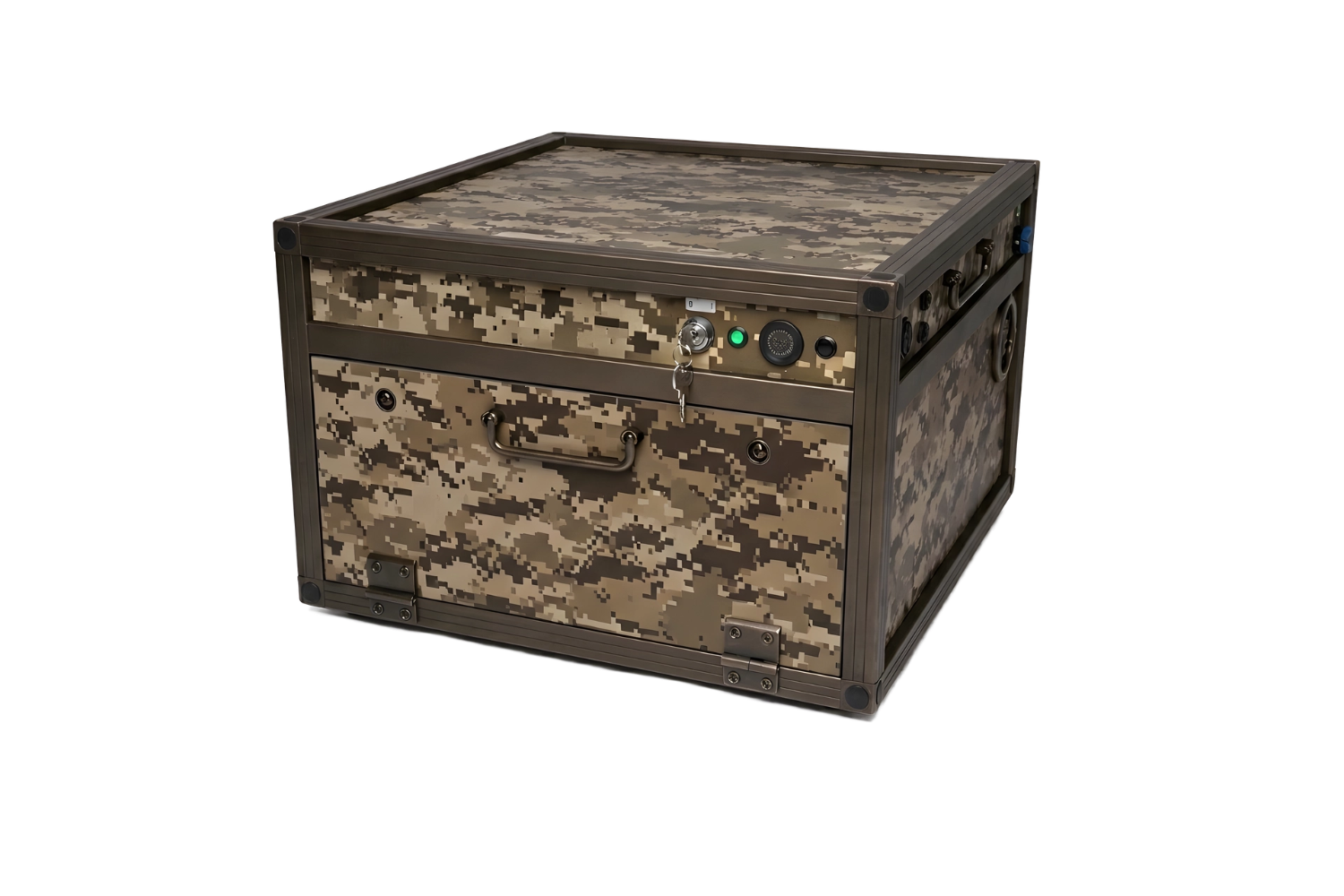
Dedicated Cabinets (Section 4.2)
Spare and removed batteries exceeding 100 Wh must be stored in a dedicated cabinet conforming to one of three European standards: EN 14470, EN 16121, or EN 16122. These standards govern fire resistance, containment, and structural integrity.
Open Deck Placement
Where cabinets are located on open deck, they must be positioned a minimum of 1.0 m from combustible materials, must not obstruct escape routes, and must not be adjacent to embarkation stations.
Prohibited Locations
Charging spaces must NOT be located:
- Forward of the collision bulkhead
- Inside Category A machinery spaces
- Adjacent to the main electrical power source or switchboard
Batteries under charge must be a minimum of 1 m from these boundaries. For vessels under 500 GT, this applies "where practicable."
Temperature (Section 4.10)
Ambient storage temperature must not exceed 45°C. The same section notes that manufacturers estimate thermal runaway can begin at battery temperatures between 60°C and 70°C. Temperature monitoring should integrate with the ship's alarm system where practical. Given Mediterranean summer conditions (particularly in enclosed garages and lazarettes) this is a real operational concern.
Structural Fire Protection (Sections 4.11/4.15)
Structural fire protection requirements depend on vessel size:
| Vessel Size | Insulation Standard | Exceptions |
|---|---|---|
| 500 GT+ | A-60 for all boundaries | A-0 for negligible fire risk spaces; A-0 if water-mist calculation shows boundary stays below 140°C during all-cell thermal runaway |
| Under 500 GT | A-30 | Open deck charging + compliant storage = may omit |
| Short-range | B-15 equivalent | Same exception as under 500 GT |
Charging Cabinet and Station Requirements
Charging Cabinet Requirements (Sections 4.12–4.13)
Where batteries are charged inside a cabinet, that cabinet must provide:
- Charging with cabinet closed (not propped open)
- Internal temperature rise detection with over-temperature indication
- Extinguishing medium application without opening the cabinet
- Off-gas venting to prevent overpressure and explosive gas buildup
- Automatic charging stop on fault or overheating (section 4.13.1)
- Suitable insulation to prevent fire spread
- Explosion protection
- Maximum kWh capacity limit defined
Charging Station Requirements (Section 4.19)
Whether on open deck or in a dedicated compartment, charging stations must meet these requirements:
- Clear notice displayed: battery type and maximum kWh
- Free of ignition sources and flammable materials
- Items secured against sea movement
- Mechanical securing means for batteries
- Approved charging connections (UKCA, CE, or UL) with protective caps
External charging stations must be protected from direct sunlight. CCTV or thermal imaging is recommended. The IP rating must be agreed with the class society.
Battery Management Systems (Section 6)
A BMS monitors voltage, current, and temperature, and regulates via thermal management. The optimum charging range is 15–35°C. The BMS must be capable of deactivating faulty cells, modules, or disconnecting the entire battery. BMS failures are a known cause of battery fires. Where no BMS is present, the guidance recommends an in-line RCD cable (Mode 2 charging equivalent).
Ventilation, Detection, and Suppression
Ventilation (Section 4.16)
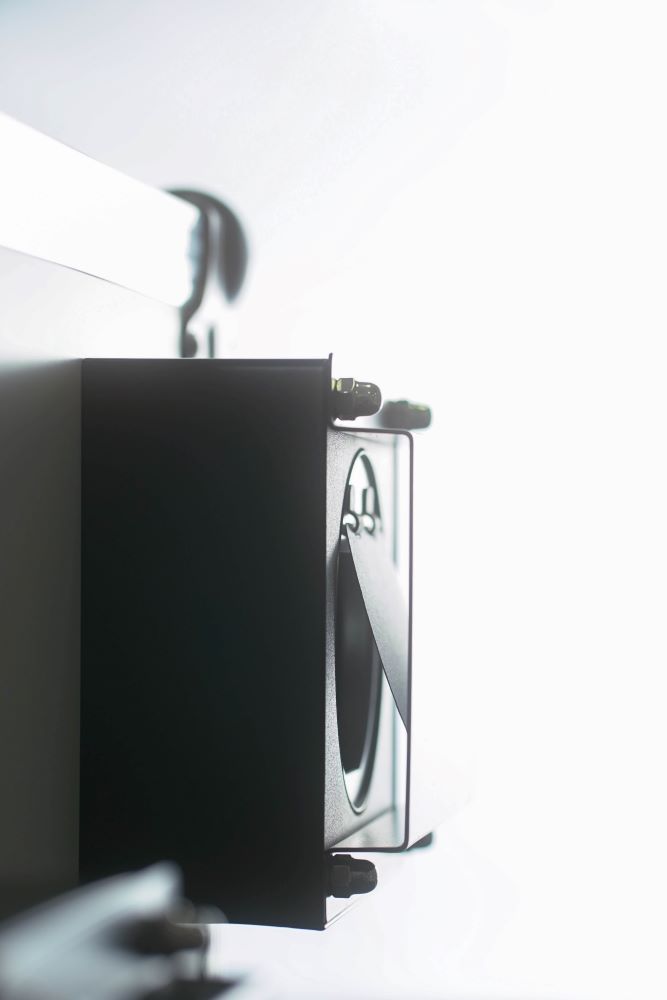
Any space used for battery storage or charging requires ducted mechanical ventilation. The system must be capable of extracting toxic and explosive gases during a battery fire, and must stay below the lower explosion limit (LEL) assuming all cells in thermal runaway simultaneously. Extraction must draw from both upper and lower sections of the compartment. The ventilation must be independent of other ventilated spaces, unless isolated with automatic fire-dampers.
Fire Detection (Section 7)
Detection requirements include:
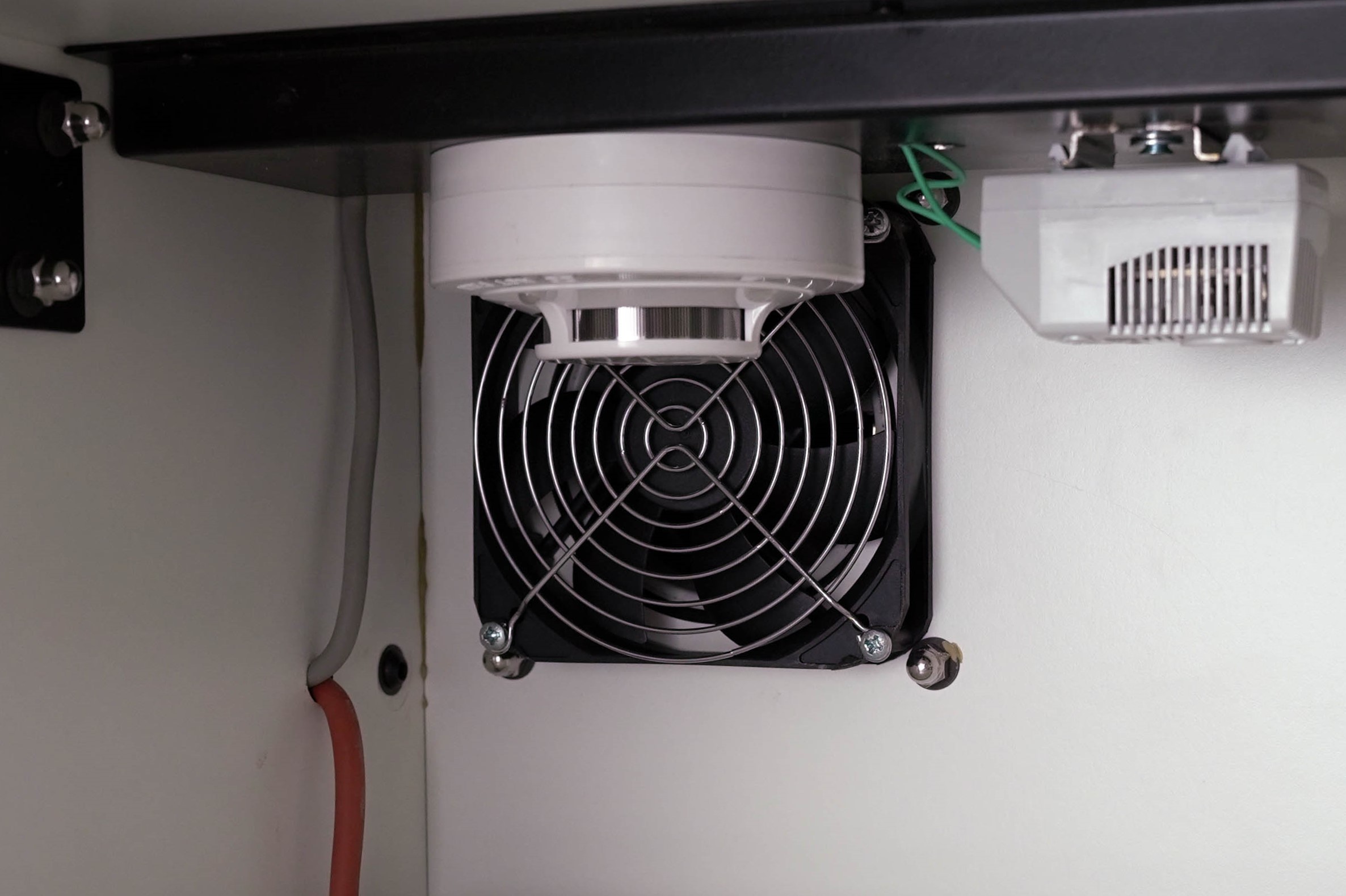
- Fixed smoke, heat, and gas detectors installed per manufacturer recommendations
- CCTV at a continuously manned control position; IR/thermal imaging recommended
- Fixed fire detection per SOLAS II-2/Part A and Fire Safety Systems Code Chapter IX
- Audible and visual alarms both locally and at the manned position
Off-gas detectors are specifically noted as NOT required. The technology is developing, expensive, and has limited evidence for marine use. Thermal imaging is also NOT required but is recommended.
Fire Suppression (Section 8)
Suppression requirements are substantial:
- Automatic water-based system per SOLAS II-2, Part C, Regulation 10.4.1.1.3 (water-mist is identified as most effective)
- Minimum two portable extinguishers suitable for battery fires near each entrance
- Fire suppression blankets and containment bags appropriate to the battery inventory
- Electrical supply to the charging battery MUST be cut and isolated before firefighting begins
Reignition and Toxic Smoke
Lithium-ion battery fires are self-sustaining and generate their own oxygen through cathode decomposition. Thermal runaway initiates at 60–70°C. Batteries must be monitored until removed from the vessel, because reignition can occur hours or days later. Battery fire smoke contains hydrogen fluoride, highly corrosive, toxic, and capable of causing chemical burns through clothing. Full PPE with SCBA is always required when exposed to battery fire smoke. Level 2 firefighting suits per BS EN 469:2020 are recommended.
Off-gases during a lithium-ion fire include CO2, CO, hydrogen, and volatile organic compounds (flammable and health hazardous). During fire conditions, the gases escalate to include hydrogen chloride, hydrogen cyanide, hydrogen fluoride, soot, and metal oxides.
The 1 January 2027 Type Approval Deadline
Section 5 of MGN 681 (M) Amendment 1 introduces a hard deadline. From 1 January 2027:
- All battery storage and charging containers must be UK Type Approved by a UK Nominated Body
- Batteries exceeding 100 Wh must have third-party conformity assessment (UKCA or equivalent)
- Batteries must comply with IEC 62619 and/or IEC 62620
Items already onboard before 1 January 2027 may remain in service, but the MCA recommends replacement. Any new containers installed after that date must meet the Type Approval requirement.
What to Do Now
- Audit your current battery inventory. List every lithium-ion battery aboard, its capacity in Wh or kWh, and its current storage and charging location.
- Check your storage containers. Do they conform to EN 14470, EN 16121, or EN 16122? Are they from a manufacturer that is pursuing UK Type Approval?
- Contact your class society. Discuss your vessel's specific requirements and agree on an action plan before the deadline.
- Source compliant equipment. Lithium fire safety boxes from manufacturers like RACLAN and ZARGES are aligned with the cabinet and containment requirements set out in MGN 681.
Section 4.4: Battery Certification
Batteries above 100 Wh require third-party conformity assessment. They must comply with IEC 62619 (secondary lithium cells for industrial applications) and/or IEC 62620 (secondary lithium cells for industrial applications, large format). Check your battery documentation against these standards now, not in December 2026.
Crew Training Requirements
Section 9 of MGN 681 sets out crew training obligations. These aren't optional extras; they must be integrated into the vessel's Safety Management System (SMS).
What Crew Must Be Trained On
- Safe operation, storage, and charging of lithium-ion batteries
- Damage identification and quarantine/disposal procedures
- Competence in specialist equipment: Li-ion extinguishers, fire blankets, IR cameras
- Early signs of thermal runaway and battery failure
Early Warning Signs
All crew must be trained to recognise these indicators of lithium-ion battery failure:
- Hissing, whistling, or popping sounds
- Sweet chemical smell
- Black "smoke" or white vapour
- Clear fluid leak (electrolyte) or blue fluid leak (coolant)
- Sudden heat generation: thermal runaway is self-sustaining and produces hazardous gases
Drills and Responsibility
Drills must be conducted at intervals agreed with the administration. The guidance recommends appointing a named responsible person (typically the Safety Officer, Master, or Chief Engineer) for battery safety oversight.
Damaged Battery Handling
Damaged batteries must be stored with extreme caution and unloaded at the first opportunity. They must never be charged. If damage is discovered during charging, charging must cease immediately. Damaged batteries may emit toxic, flammable gases. Exposure causes severe respiratory, eye, and skin irritation.
Equipment That Supports MGN 681 Compliance
Meeting MGN 681 requirements starts with the right equipment. The following product categories are aligned with the storage, charging, and containment requirements set out in the guidance.
Lithium Fire Safety Boxes
RACLAN active safety boxes support compliance within the vessel's wider safety arrangement by providing temperature-monitored charging, automatic suppression on thermal runaway detection, and off-gas venting, directly aligned with the charging cabinet requirements in sections 4.12–4.13.
Battery Storage Containers
ZARGES lithium battery storage containers are designed for the safe transport and storage of lithium-ion batteries, supporting compliance with the dedicated cabinet requirements of section 4.2 and the EN standards referenced in the guidance.
Fire Suppression Blankets and Containment Bags
Section 8 specifically calls for fire suppression blankets and containment bags appropriate to the battery inventory. These are available as part of a complete lithium battery storage package.
For a detailed comparison of RACLAN and ZARGES equipment and how they map to MGN 681 requirements, see our complete guide to lithium fire safety boxes for yachts.
Need Help Assessing Your Vessel?
We can review your current battery inventory and storage arrangements against MGN 681 requirements. Contact ops@merceryachting.com or call +356 79797962 to discuss your vessel's requirements, or request a quote.
Frequently Asked Questions
What is MGN 681?
MGN 681 (M) Amendment 1 is the UK Maritime and Coastguard Agency's guidance on fire safety, storage, and charging of small electrically powered craft with lithium-ion batteries aboard yachts. Published 19 December 2025, it supersedes the original MGN 681 (M) of 2 June 2023.
Does MGN 681 apply to non-UK flagged yachts?
The guidance is UK-specific, based on the REG Yacht Code Part A, Chapter 14. However, the underlying safety principles (dedicated battery storage, structural fire protection, crew training, fire detection and suppression) are widely adopted across flag states. Other administrations have their own evolving requirements, and many class societies reference similar standards.
What happens if I don't comply by 1 January 2027?
Items already onboard before that date may remain in service, but the MCA recommends replacement. From 1 January 2027, any new battery storage and charging containers installed on UK-registered vessels must be UK Type Approved by a UK Nominated Body (section 5).
What is the 100 Wh threshold?
It is the point at which spare or removed lithium-ion batteries require dedicated storage in a cabinet conforming to EN 14470, EN 16121, or EN 16122 (section 4.2). A laptop battery is approximately 40 Wh, below the threshold. An e-foil battery at 1–5 kWh is well above it.
Do I need a charging cabinet or can I charge on open deck?
Open deck charging may allow exemption from some structural fire protection requirements (section 4.11), but spare batteries above 100 Wh still need dedicated cabinet storage (section 4.2). Even open deck stations must meet the requirements of section 4.19: clear notices, protection from direct sunlight, CCTV/thermal imaging recommended, and IP rating agreed with the class society.
Where can I get the full text of MGN 681?
The full text is available on GOV.UK. For enquiries, contact regyachtcode@mcga.gov.uk or +44 (0)203 81 72000.
Sources
- MGN 681 (M) Amendment 1: "Fire safety and storage of small electric powered craft on yachts," MCA, 19 December 2025.
https://www.gov.uk/government/publications/mgn-681-m-amendment-1-fire-safety-and-storage-of-small-electric-powered-craft-on-yachts/mgn-681-m-amendment-1-fire-safety-and-storage-of-small-electric-powered-craft-on-yachts - Original MGN 681 (M) (withdrawn): "Fire safety and storage of small electric powered craft on yachts," MCA, 2 June 2023.
https://www.gov.uk/government/publications/mgn-681-m-fire-safety-and-storage-of-small-electric-powered-craft-on-yachts/mgn-681-m-fire-safety-and-storage-of-small-electric-powered-craft-on-yachts - IMDG Code Amendment 42-24: SOLAS amendments to the IMDG Code.
https://www.westpandi.com/news-and-resources/news/september-2024/solas-amendments-to-the-imdg-code-(amendment-42-24/