We were at booth SY43 of the Palma International Boat Show on 9 May 2026 when TechnoPhysik Engineering officially launched RAMBSS, the Raclan Maritime Battery Safety System. After two years of development, sea trials, and the Lloyd's Register Design Appraisal process, the system is now market-ready, with the first commercial installations scheduled for the 2026 to 2027 refit season.
This is the news vessel-side procurement teams across the Mediterranean have been waiting for. RAMBSS is the first fixed, modular, lithium-ion battery safety cabinet engineered specifically for permanent superyacht installations, designed against the new MGN 681 (M) Amendment 1 reference framework, the Malta Commercial Yacht Code, and the Marshall Islands MI 103 2021 requirements. As the exclusive RACLAN and LiVault dealer for Malta, Greece, and Sicily, Mercer Yachting will be supplying it across the Central Mediterranean.
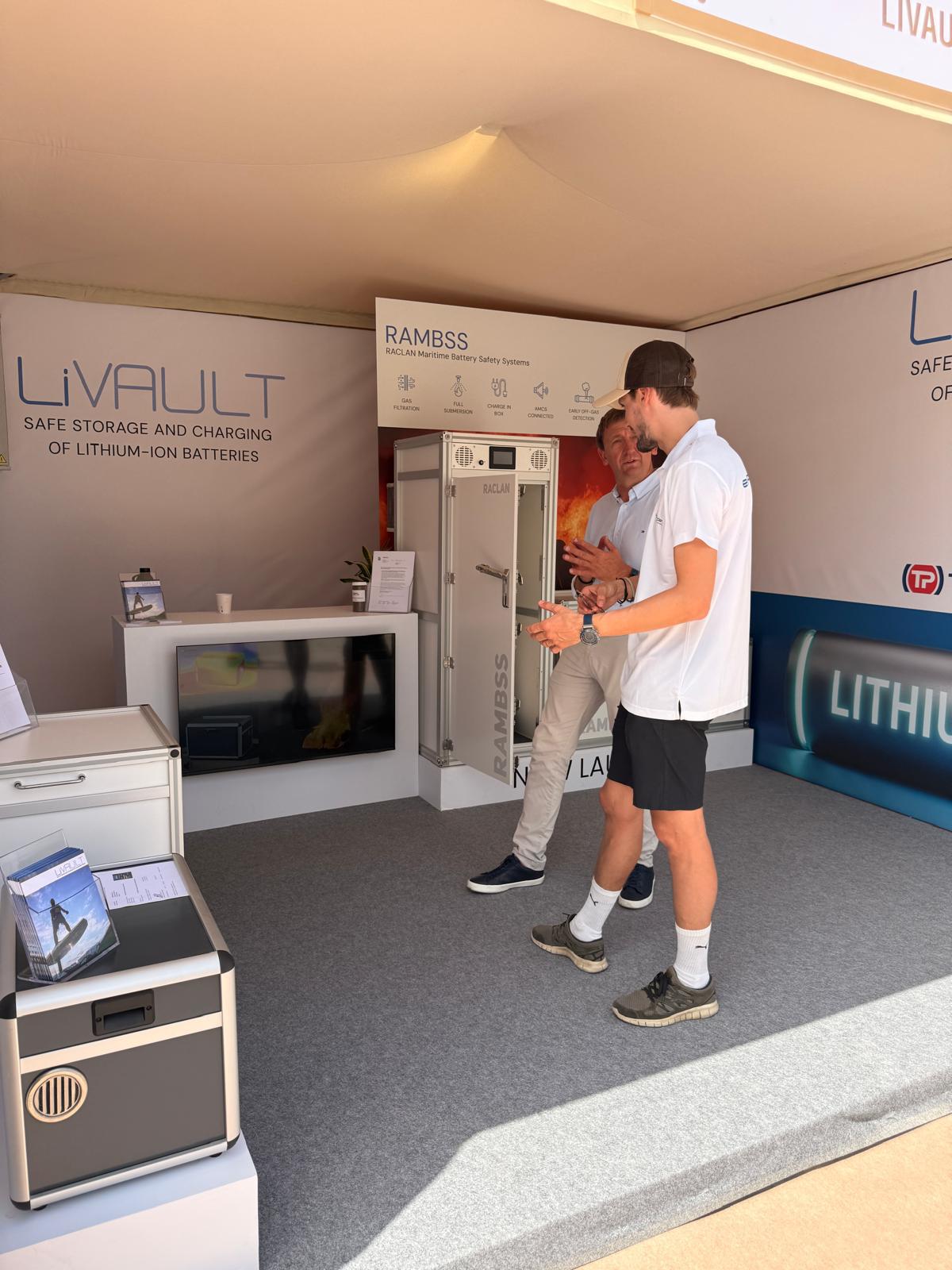
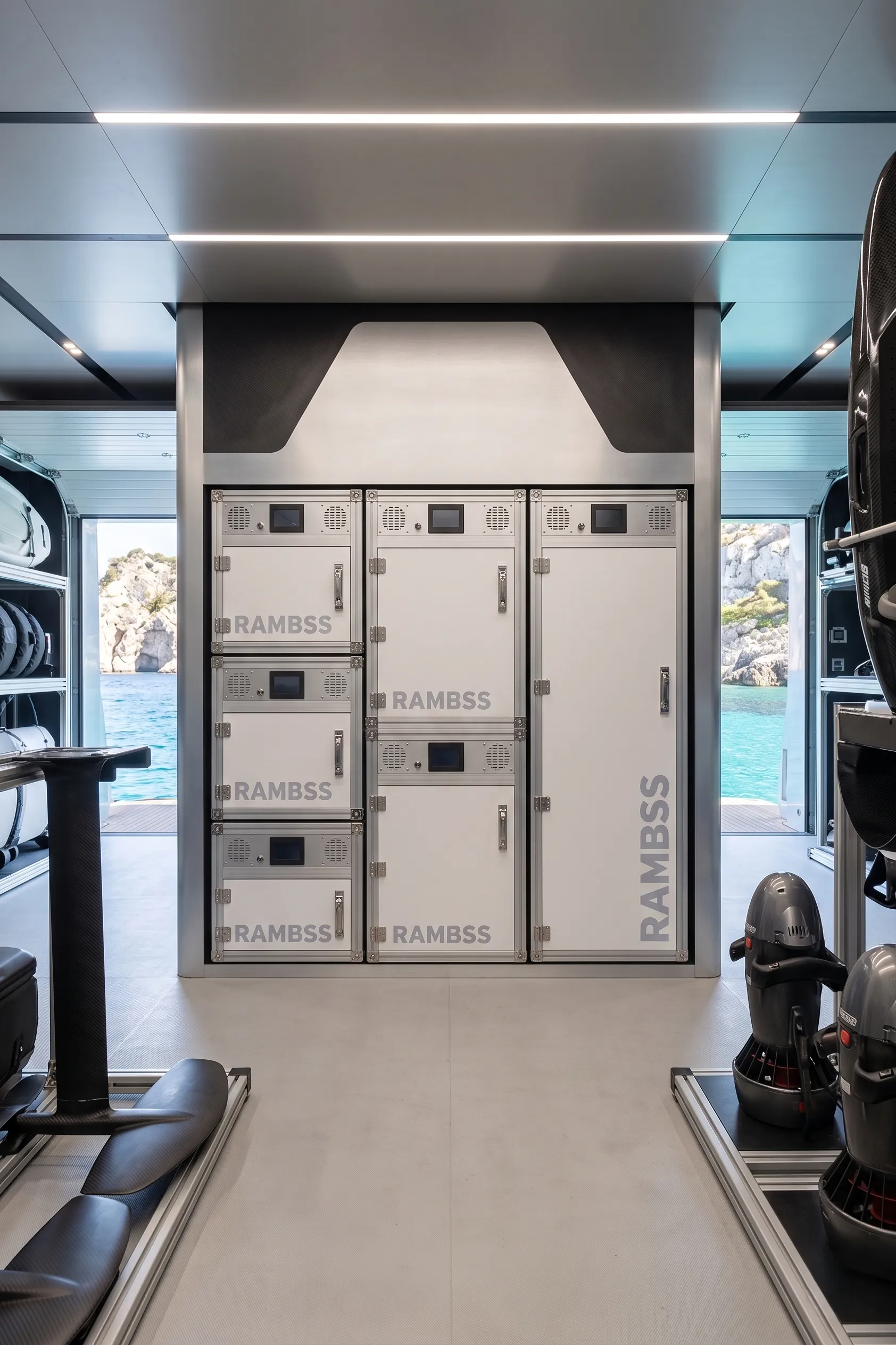
The RAMBSS Module on the Livault stand at Palma 2026, alongside the broader LiVault lithium-ion product wall. (Photo: Mercer Yachting, 9 May 2026.)
Key Facts
Launch event: Palma Superyacht Show 2026, booth SY43, 9 May 2026
Manufacturer: TechnoPhysik Engineering (Rheda-Wiedenbrück, Germany)
Brand family: LiVault (RACLAN portable boxes + RAMBSS fixed cabinets)
Class society: Lloyd's Register Design Appraisal (DAD LR26434348SF, 11 November 2024)
Mediterranean dealer: Mercer Yachting (Malta, Greece, Sicily)
What is RAMBSS?
RAMBSS stands for Raclan Maritime Battery Safety System. Where the existing RACLAN Box II and RACLAN Square Marine Box II are portable units, RAMBSS is fixed installation. It bolts into the vessel during refit, integrates with the alarm and monitoring system, and provides dedicated lithium-ion storage and charging capacity for the high-power applications now common on superyachts: e-foil charging stations, lithium house banks, dedicated tender battery rooms, and large auxiliary power systems.
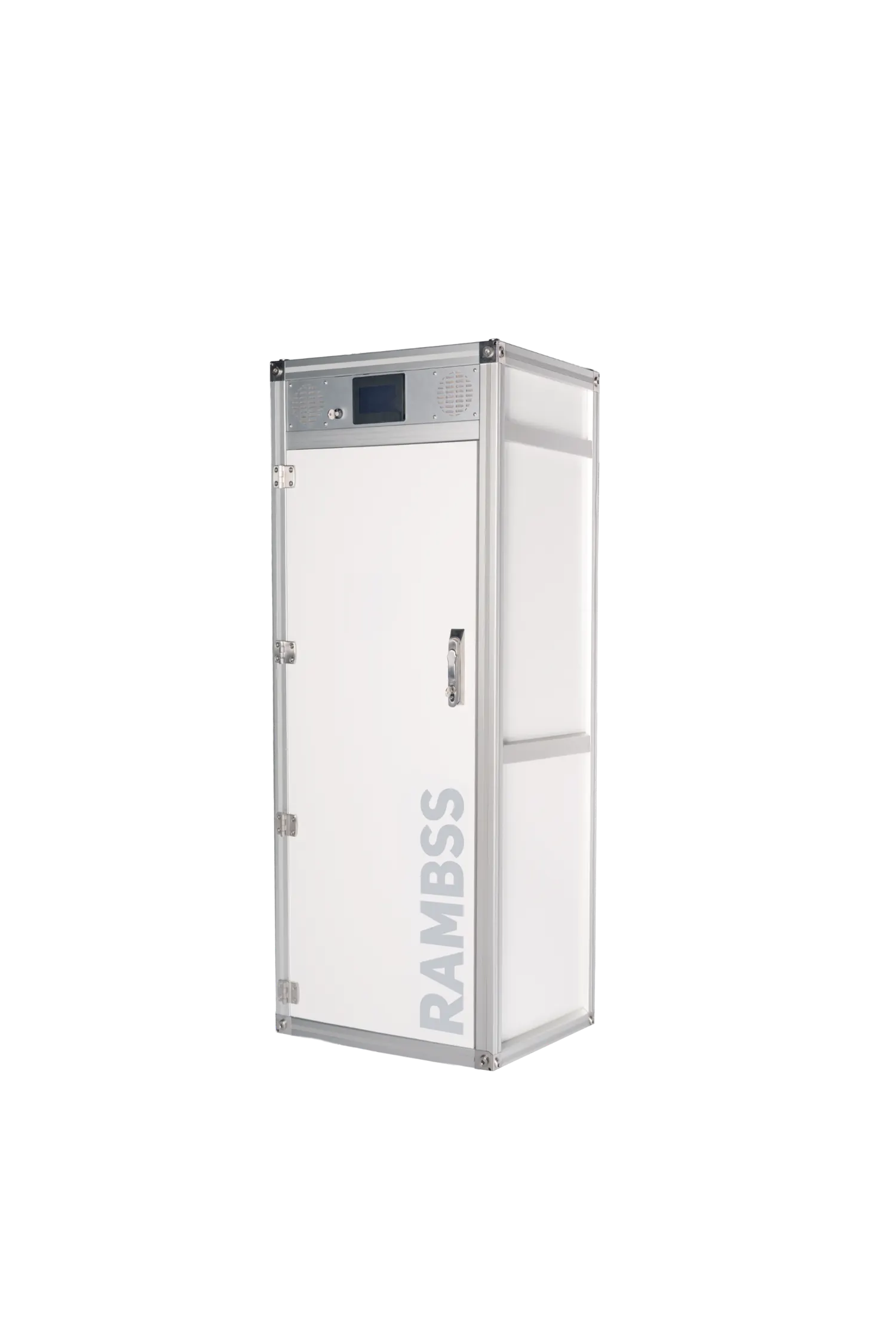
The architecture is modular. Three module sizes are available, each with a 600 by 600 mm footprint that stacks horizontally or vertically:
| Module | External (mm) | Internal (mm) | Max Battery Capacity |
|---|---|---|---|
| Module 1 (500) | 600 × 600 × 500 | 550 × 550 × 300 | 5.2 kWh |
| Module 2 (750) | 600 × 600 × 750 | 550 × 550 × 500 | 5.2 kWh |
| Module 3 (1500) | 600 × 600 × 1,520 | 550 × 550 × 1,300 | 5.2 kWh |
The modular design is the practical innovation. Most fixed-install lithium safety solutions on the market are monolithic, which forces refit teams to clear large continuous spaces in already-tight engine rooms. RAMBSS lets you stack a small Module 1 in a tender garage corner, a tall Module 3 against the engine-room bulkhead, and a Module 2 in the watertoy locker, all monitored from one OLED touchscreen interface.
Inside each module, the architecture mirrors what makes the RACLAN Boxes effective: a multi-nozzle TRIDENT extinguishing system, a layer of FIPRO non-combustible vermiculite panels (Bureau Veritas MED certificate 07000/E0, SOLAS 74 compliant, valid to February 2029), an explosion-buffering RACLAN Explosion Buffer System (REBS), and a multi-stage toxin filter that captures hydrogen fluoride and the volatile organic compounds released during a lithium thermal event. For a full component-level walkthrough of how these pieces interact, see What’s Inside a RACLAN: Engineering of Lithium Fire Containment.
Why TechnoPhysik chose Palma 2026 for the launch
Palma is the natural home for a launch of this kind. The Palma International Boat Show is one of the largest superyacht events in the Mediterranean, drawing captains, ETOs, refit yard project managers, and procurement teams from across the basin. The yards that matter for RAMBSS adoption (STP Palma, Astilleros de Mallorca, Vittoriosa in Malta, Palumbo Marine Yachts in Naples and Marseille, NaoYachts in Spain, the Greek refit cluster around Piraeus) all walk the show.
The timing matters too. MGN 681 (M) Amendment 1, published by the UK MCA on 19 December 2025, set the regulatory direction for lithium-ion battery safety on UK-registered commercial yachts. The headline deadline is 1 January 2027: all battery storage containers on UK commercial vessels above the 100 Wh threshold must hold Type Approval from a UK Nominated Body. New builds and refits with delivery dates after that point are already speccing against the framework.
The parallel pieces sit in the Mediterranean rulebook. Malta's Commercial Yacht Code 2020 (section 11.2.1.4) requires safe storage of lithium-ion batteries on Malta-flagged commercial yachts, and the Marshall Islands Maritime Administrator (MI 103 2021) sets comparable obligations for Marshall Islands flags, which carry the largest share of the global charter fleet. RAMBSS lands in the market 18 months ahead of the UK Type Approval deadline, with class society design appraisal already in place. That timeline is the story.
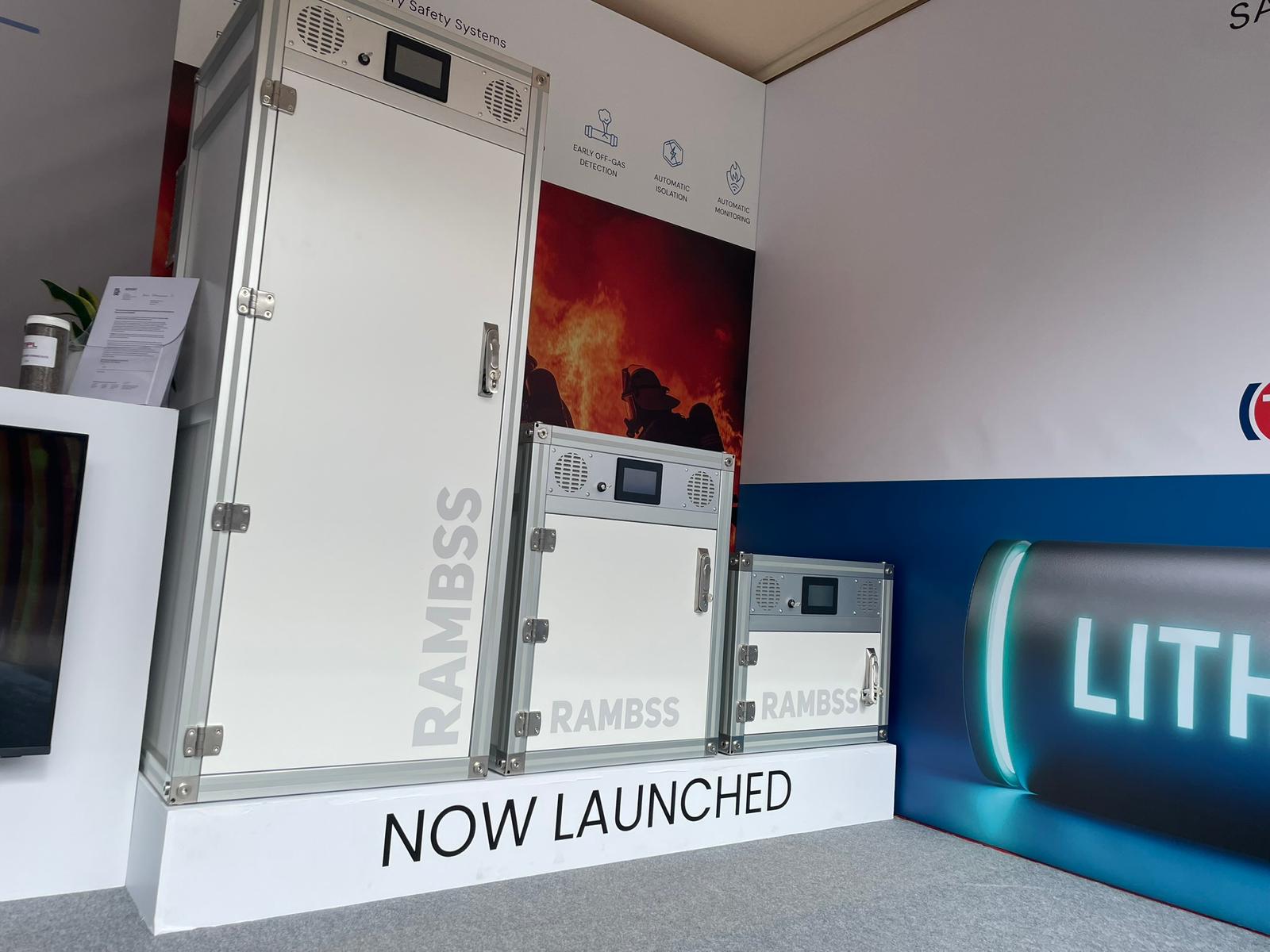
The "Now Launched" wall on the Livault stand, with one of the RAMBSS units in the foreground. (Photo: Mercer Yachting, 9 May 2026.)
Specifying RAMBSS on a refit
The procurement workflow for RAMBSS is closer to a class-certified engine-room equipment specification than a typical chandlery order. There are four practical inputs we need from a vessel before we can scope the right module configuration:
- Battery inventory. Number of batteries, individual capacity in Wh, chemistry (NMC is the most common; LiFePO4 also covered), and total aggregate capacity in kWh. Include the watertoys (Fliteboard, Seabob, jet boards, dive scooters) plus any planned future additions, because RAMBSS is sized for the lifetime of the vessel.
- Intended on-board location. Engine room, tender garage, dedicated battery locker, or watertoy garage. Each location has different ventilation, drainage, and access requirements. The modular design means we can spread the system across multiple rooms.
- Vessel power supply. RAMBSS runs from 100–230 V external mains with a LiFePO4 internal backup. We need to confirm continuous shore-power availability, generator integration, and how the cabinet's alarms route into the existing AMCS (Alarm Monitoring and Control System).
- Class society and flag. Lloyd's Register, RINA, Bureau Veritas, ABS, Marshall Islands, Cayman Islands, Malta flag. The compliance pathway varies. RAMBSS holds the Lloyd's Register DAD and aligns with the major Mediterranean class regimes, but the specific approval package for your vessel needs to be coordinated case by case.
Installation clearances are tight: 20 cm above the cabinet, 10 cm behind. The cabinet face needs walkway access for the OLED touchscreen and emergency override controls. WiFi monitoring lets the engineering team see live charge state, internal temperature, and any fault conditions remotely from the bridge or the captain's office.
For refit teams: the typical lead time from order confirmation to delivery to a Mediterranean yard is 8 to 12 weeks. Pre-spec consultations with TechnoPhysik engineering can run in parallel with your refit programme, so we can lock the module sizing and AMCS integration before the cabinet leaves Rheda-Wiedenbrück.
Where RAMBSS fits on a 30 to 100 metre yacht
Three vessel scenarios are driving the early enquiries we're seeing from Mediterranean charter operators:
Watertoy-heavy charter yachts (40 to 60 m)
The typical 50 metre charter motor yacht now carries between 8 and 14 lithium-powered watertoys: Fliteboards, Seabobs, dive scooters, e-bikes for shore excursions, plus the spare battery packs that come with each unit. Aggregate lithium capacity sits anywhere from 15 to 40 kWh. A typical configuration is two Module 3 cabinets in the watertoy garage, giving 10.5 kWh of safe charging plus storage for the rest of the fleet, monitored from a single touchscreen.
E-foil charging stations on sailing superyachts (45 to 70 m)
Sailing yachts running Fliteboard or Lift programmes have tighter engineering rooms but no diesel-generator constraint, which means they can route RAMBSS to a dedicated lazarette locker. A Module 2 (5.2 kWh) typically handles three to four e-foil batteries with overnight charging. The class society conversation here is about waterproof zone separation between the cabinet and the engine room.
Lithium house-bank installations (60 m+)
The newer 60 metre-plus builds are moving from hybrid AGM to full LiFePO4 house banks, often in the 80 to 200 kWh range. RAMBSS in this scenario isn't the primary house-bank enclosure (those use bespoke marine battery racks), but it serves the auxiliary lithium storage: tender battery banks, shore-side e-mobility, and watertoy charging that runs off the house bank's DC bus. The compliance benefit is that the dedicated RAMBSS cabinet isolates the higher-risk consumer-cell chemistries from the more stable LiFePO4 main bank.
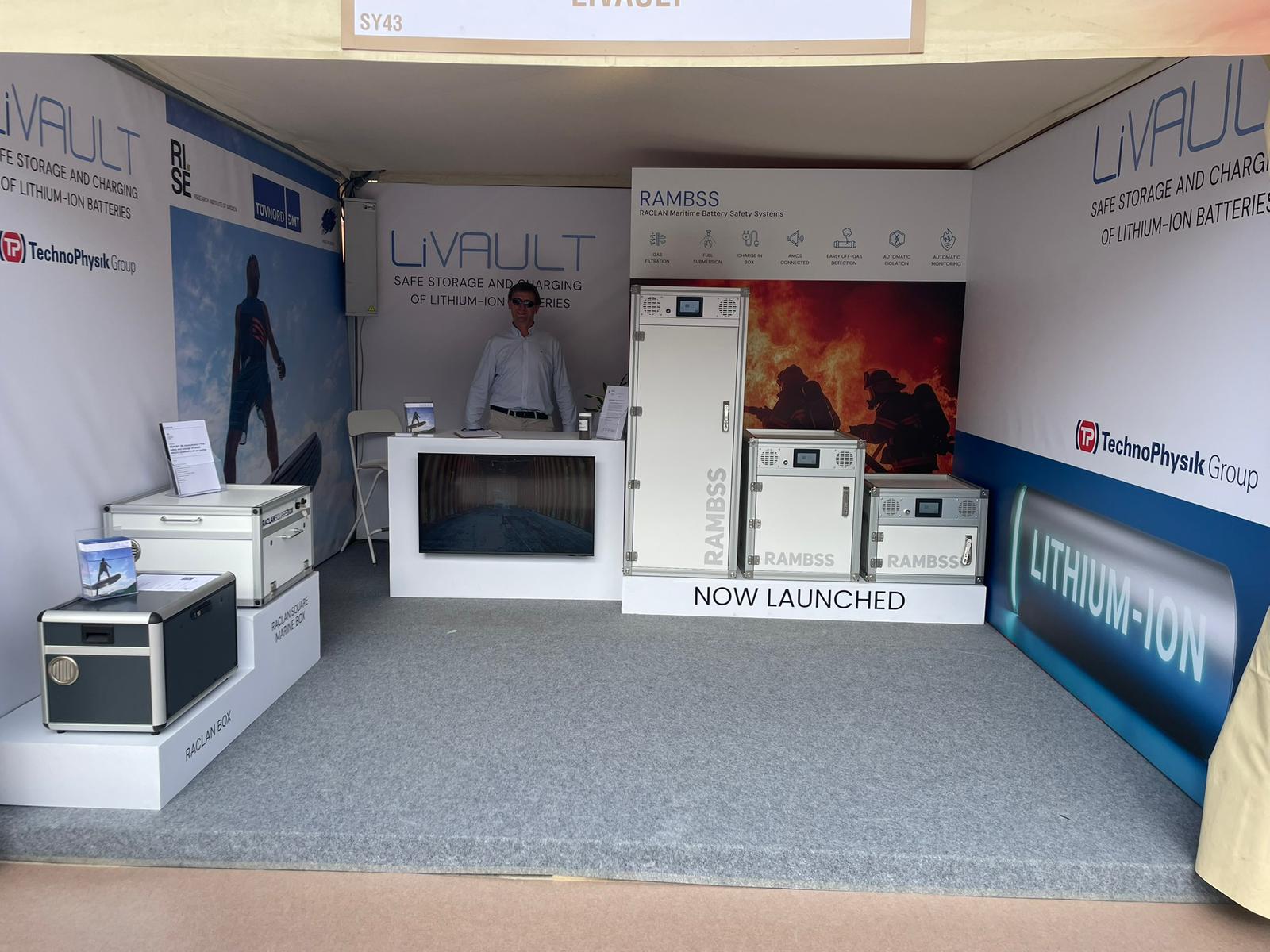
A side-on view of the Livault SY43 stand, with RAMBSS at full installation scale and the RACLAN portable boxes on the left for comparison. (Photo: Mercer Yachting, 9 May 2026.)
The wider LiVault range
RAMBSS sits alongside the existing portable units in the LiVault family. For a full overview of the dealership scope, certifications, and the broader product range, see our earlier announcement: Mercer Yachting Appointed Exclusive RACLAN and LiVault Dealer for Malta, Greece, and Sicily.
The portable boxes serve different use cases from RAMBSS. The RACLAN Box II (1.75 kWh max, 24.7 kg, €1,990) is the right choice for two e-foil packs or a small spare-battery rotation in a workshop or tender. The RACLAN Square Marine Box II (3.5 kWh max, ~42 kg, €5,495) covers the larger portable scenario, with a 10-litre TRIDENT tank and a spring-loaded pressure relief unit. Both portable models are in stock at our Marsaskala showroom for immediate dispatch across Malta, Greece, and Sicily. For consumer purchases in Malta, Ritz Marine handles walk-in sales at ritzmarine.com.
If you're not sure whether you need portable or fixed, the rule of thumb is simple: portable for under 3.5 kWh and seasonal use, fixed (RAMBSS) for permanent on-board integration, class society conversations, and aggregate lithium loads above 5 kWh.
Compliance and the 1 January 2027 deadline
The single most important piece of context for any captain or ETO reading this: MGN 681 (M) Amendment 1 sets a 1 January 2027 deadline for UK-registered commercial yachts. From that date, all lithium battery storage containers on UK commercial vessels must hold Type Approval from a UK Nominated Body. Vessels that fail to comply face survey findings, insurance complications, and potential charter operability issues.
Our full guide to MGN 681 sits here: MGN 681 (M) Amendment 1 Explained: Lithium Battery Safety on Yachts. The Malta CYC 2020 and Marshall Islands MI 103 obligations are similar in substance but slightly different in process; we work through the right approval pathway with each refit individually.
RAMBSS is being engineered against the Type Approval framework. The Lloyd's Register Design Appraisal already in place is the foundation for the Type Approval submission. For new builds and refits scheduled to deliver after Q4 2026, speccing RAMBSS now is the clean path to compliance.
How Mercer Yachting handles your RAMBSS specification
As the exclusive RACLAN and LiVault dealer for Malta, Greece, and Sicily, Mercer Yachting handles the end-to-end procurement and installation coordination for RAMBSS across the Central Mediterranean:
- Specification consultation: we collect your battery inventory, vessel layout, and class society requirements, then match the right module configuration with the TechnoPhysik engineering team.
- Quayside delivery to any port in Malta, Greece, or Sicily. Greece is within the EU single market, so no customs duties on shipments from Malta.
- Refit yard coordination: we work directly with your yard (Vittoriosa, Palumbo Naples or Marseille, NaoYachts, Astilleros de Mallorca, Greek refit yards) to slot RAMBSS into the build programme.
- AMCS integration: we coordinate with your electronics integrator (or your bridge systems supplier) to land the alarm and monitoring outputs in the right places.
- Documentation package: Lloyd's Register DAD, TRIDENT EN 1568-3 certification, Bureau Veritas MED FIPRO certification, RACLAN test reports, and the user manual, all assembled for the vessel's compliance file.
- After-sales and warranty: the support package across all three territories, with parts available from our Malta hub.
Frequently Asked Questions
What did TechnoPhysik launch at Palma Superyacht Show 2026?
TechnoPhysik officially launched RAMBSS, the Raclan Maritime Battery Safety System, at booth SY43 on 9 May 2026. RAMBSS is a fixed, modular cabinet for lithium-ion battery safety, designed for permanent superyacht installations. It joins the existing RACLAN Box II and RACLAN Square Marine Box II portable units under the LiVault brand family.
How is RAMBSS different from the RACLAN portable boxes?
RAMBSS is a fixed installation. It bolts into the vessel during refit and integrates with the boat's AMCS. The RACLAN Box II and Square Marine Box II are portable units. RAMBSS handles substantially more capacity (up to 5.2 kWh per module, with three sizes available) and supports stackable, multi-zone configurations.
Is RAMBSS certified for Lloyd's Register and other class societies?
Yes. RAMBSS holds a Lloyd's Register Design Appraisal (DAD LR26434348SF, 11 November 2024). The TRIDENT agent is EN 1568-3:2008 certified, and the FIPRO interior carries Bureau Veritas MED certification 07000/E0 (SOLAS 74, valid to February 2029). It aligns with MGN 681 (M) Amendment 1, the Malta CYC 2020 (section 11.2.1.4), and Marshall Islands MI 103 2021.
How do I specify RAMBSS for a refit at a Mediterranean yard?
Contact Mercer Yachting with your vessel's battery inventory: number of batteries, individual capacity, total aggregate capacity, and intended on-board location. We size the modules, coordinate with your refit yard, and deliver to any port in Malta, Greece, or Sicily. Typical lead time is 8 to 12 weeks from order confirmation. Request a specification consultation.
What is the 1 January 2027 deadline?
MGN 681 (M) Amendment 1 (UK MCA, 19 December 2025) requires all lithium battery storage containers on UK-registered commercial yachts to hold Type Approval from a UK Nominated Body by 1 January 2027. RAMBSS is being engineered to that approval pathway.
Does Mercer Yachting cover Greece and Sicily?
Yes. We are the exclusive RACLAN and LiVault dealer for Malta, Greece, and Sicily. Coverage includes every Greek port and island (Piraeus, Corfu, Lefkas, Rhodes, Kos, Mykonos, Santorini, Crete) and every Sicilian port (Augusta, Palermo, Syracuse, Riposto, Catania, Trapani, Milazzo). Greece sits within the EU single market.